


Hey there! As a chemical seal supplier, I get a ton of questions from customers every day. One question that pops up quite often is, "Do chemical seals need to be calibrated?" It's a great question, and today, I'm going to dive deep into this topic and share my thoughts and insights.
First off, let's understand what chemical seals are. Chemical seals, also known as diaphragm seals, are used to isolate pressure measuring instruments from the process media. They're super handy in industries where the process media can be corrosive, viscous, or contain solids that could damage the pressure instrument. By using a chemical seal, you can protect your pressure gauge, transmitter, or switch and ensure accurate and reliable measurements.
Now, back to the big question: Do they need calibration? Well, the short answer is, it depends. Let's break it down and look at the factors that determine whether calibration is necessary.
Factors Influencing Calibration Requirements
1. Accuracy Requirements
If your application demands high - precision measurements, calibration is a must. In industries like pharmaceuticals, food and beverage, and chemical manufacturing, a small error in pressure measurement can lead to significant quality issues or even safety hazards. For example, in a pharmaceutical production line, incorrect pressure readings could affect the dosage of a drug, which is a huge deal. So, if you're operating in an industry where accuracy is critical, you should definitely calibrate your chemical seals regularly.
2. Process Conditions
The nature of the process media can have a big impact on the calibration needs of chemical seals. If the process media is highly corrosive or has extreme temperatures, it can cause the diaphragm in the chemical seal to deform over time. This deformation can lead to changes in the pressure transfer characteristics of the seal, which in turn affects the accuracy of the measurement. For instance, in a chemical plant where strong acids are being processed, the acid might gradually eat away at the diaphragm, altering its properties. In such cases, more frequent calibration is necessary to account for these changes.

3. Installation and Usage
How a chemical seal is installed and used also plays a role. If the seal is installed incorrectly, it can introduce errors in the measurement. For example, if there's air trapped in the fill fluid of the chemical seal, it can affect the pressure transfer. Similarly, rough handling or over - pressurization during operation can cause damage to the seal and impact its accuracy. So, if you suspect that the installation or usage has been less than ideal, it's a good idea to calibrate the seal.
The Calibration Process
If you've decided that your chemical seals need calibration, here's a general overview of how the process works. First, you need to remove the chemical seal from the process. This should be done carefully, following all safety procedures. Once it's removed, you'll need to clean the seal to get rid of any process media residue.
Next, you'll use a calibration device to apply known pressures to the seal and measure the output. This output is then compared to the expected values. If there are any discrepancies, adjustments need to be made. This might involve adjusting the settings on the pressure instrument or replacing the diaphragm if it's damaged.
After the adjustments are made, the seal is re - tested to ensure that it's now providing accurate measurements. Once it passes the re - test, it can be reinstalled in the process.
Our Product Range
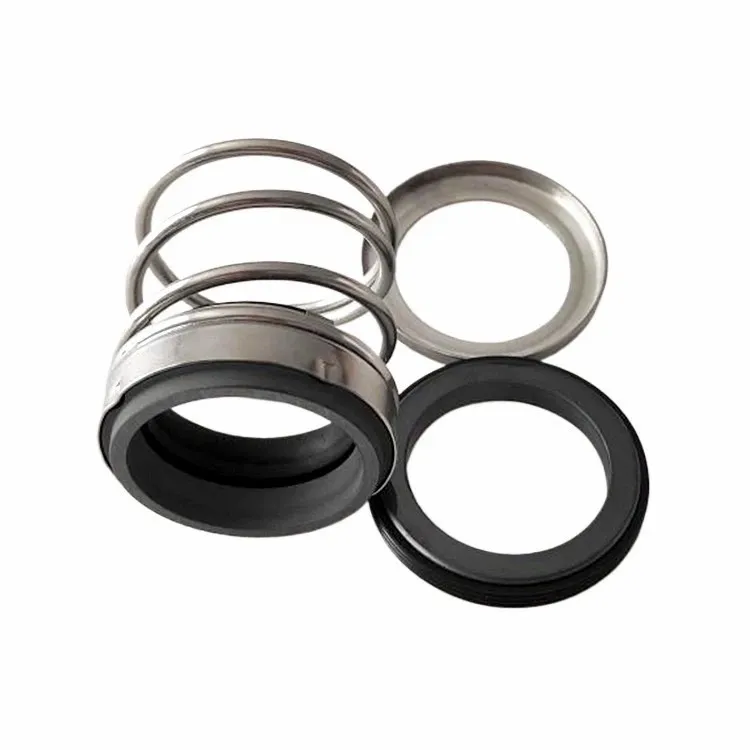
At our company, we offer a wide range of high - quality chemical seals to meet different industry needs. We also have some other great products that you might be interested in. For example, we have the Equivalent to John Crane Type 21 Single Marine Mechanical Seal for Sewage Pump. This seal is great for sewage pumps in marine applications. It's designed to withstand the harsh environments typical in sewage systems.
Another great product is the MOR 2 high temperature mechanical seal. This seal is ideal for applications where high temperatures are a concern. It can maintain its performance even in extreme heat.
And if you're in need of a seal for a sewage water pump, check out our MOR 2100 Sewage Water Pump Spring Seal. It's specifically designed to handle the challenges of sewage water pumping.
Conclusion
So, to sum it up, whether chemical seals need calibration depends on several factors, including accuracy requirements, process conditions, and installation and usage. If you're unsure whether your chemical seals need calibration, don't hesitate to reach out to us. We have a team of experts who can help you assess your situation and provide the best advice.
If you're in the market for chemical seals or any of our other products, we'd love to have a chat with you. We can discuss your specific requirements and find the perfect solution for your application. Just get in touch, and let's start the conversation!
References
- ASME PTC 19.10 - Pressure Measurement Standards
- ISO 5167 - Measurement of Fluid Flow by Means of Pressure Differential Devices
- Manufacturer's manuals for chemical seals and related instruments


