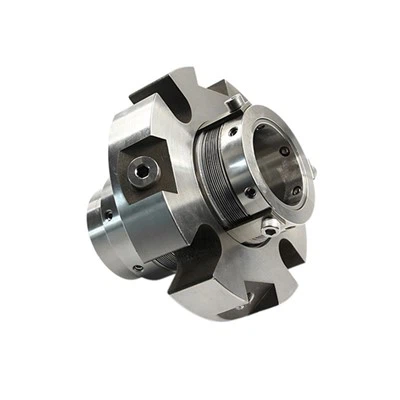
Viscosity is a fundamental property of fluids that describes their resistance to flow. In the context of mixer mechanical seals, viscosity plays a crucial role in determining the performance, reliability, and longevity of the seal. As a mixer mechanical seal supplier, I've seen firsthand how viscosity can impact these seals in various ways. In this blog post, I'll dive into the influence of viscosity on a mixer mechanical seal, and why it's so important to consider when selecting the right seal for your application.
How Viscosity Affects Seal Performance
Let's start by looking at how viscosity impacts the basic performance of a mixer mechanical seal. When a fluid has a high viscosity, it means that it's thick and sticky, and doesn't flow easily. This can create a number of challenges for a mechanical seal.
One of the primary issues is that high - viscosity fluids can increase the frictional forces within the seal. The sealing faces of a mechanical seal are designed to slide against each other with minimal friction. But when a thick fluid is present, it can act like a paste between the faces, increasing the resistance to movement. This extra friction can lead to higher wear on the seal faces, which shortens the lifespan of the seal.
Another problem is related to heat generation. The increased friction caused by high - viscosity fluids generates more heat. Mechanical seals are sensitive to temperature, and excessive heat can cause the seal faces to warp or the elastomers in the seal to degrade. For example, if an elastomer O - ring is exposed to high temperatures for an extended period, it can lose its elasticity and start to leak.


On the other hand, low - viscosity fluids present their own set of challenges. Fluids with low viscosity flow very easily, which means they can more readily leak past the seal faces. The thin nature of these fluids makes it harder for the seal to maintain a tight barrier. In addition, low - viscosity fluids may not provide sufficient lubrication between the seal faces. Without proper lubrication, the seal faces can experience metal - to - metal contact, leading to rapid wear and failure.
Impact on Seal Lubrication
Lubrication is essential for the proper functioning of a mixer mechanical seal. A well - lubricated seal reduces friction, dissipates heat, and prevents wear. Viscosity has a direct impact on the lubrication process.
For high - viscosity fluids, the thick consistency can sometimes provide good lubrication, as long as the seal is designed to handle it. The fluid can form a thick film between the seal faces, which acts as a cushion and reduces direct contact. However, if the viscosity is too high, the fluid may not be able to flow into the small gaps between the seal faces effectively. This can result in areas of poor lubrication, leading to uneven wear.
In the case of low - viscosity fluids, the thinness of the fluid means that it may not form a stable lubricating film. The fluid can easily be squeezed out from between the seal faces, especially under high pressure. This lack of a continuous lubricating film can cause dry running conditions, which are extremely damaging to the seal.
Seal Design Considerations Based on Viscosity
As a mixer mechanical seal supplier, I know that choosing the right seal design for a specific viscosity is crucial. For applications involving high - viscosity fluids, we often recommend seals with larger clearances between the seal faces. This allows the thick fluid to flow more easily and ensures proper lubrication.
For example, the MOR SE2 - AP Mechanical Seal is designed with features that make it suitable for high - viscosity applications. It has a robust construction that can withstand the higher frictional forces associated with thick fluids. The seal faces are made of materials that are resistant to wear, and the design allows for better fluid flow around the faces.
When dealing with low - viscosity fluids, we focus on seals that can provide a tighter seal and better lubrication. The MOR HRM Mechancial Seal is a great option for low - viscosity applications. It has a precision - engineered design that helps to maintain a stable lubricating film even with thin fluids. The seal also has features that prevent the fluid from leaking past the faces, such as advanced sealing geometries.
The MOR SE2 Mechanical Seal is a versatile option that can be adapted for a wide range of viscosities. It offers a balance between performance and durability, and can be customized with different materials and configurations depending on the specific fluid viscosity and application requirements.
Operational Challenges Due to Viscosity Changes
In real - world applications, the viscosity of the fluid being mixed can change. This can be due to factors such as temperature variations, chemical reactions, or changes in the composition of the fluid. These viscosity changes can pose significant challenges for mixer mechanical seals.
If the viscosity suddenly increases, the seal may experience a sudden spike in friction and heat generation. This can lead to immediate damage to the seal faces or elastomers. For example, if a hot fluid cools down during the mixing process and its viscosity increases, the seal may not be able to adapt quickly enough.
Conversely, a decrease in viscosity can lead to leakage issues. If a fluid becomes thinner due to a temperature increase, the seal may no longer be able to maintain a tight seal. This can result in product loss, contamination, and safety hazards.
Maintenance and Monitoring in Relation to Viscosity
Proper maintenance and monitoring are essential when dealing with mixer mechanical seals in applications with varying viscosities. Regular inspections can help detect early signs of wear or damage caused by viscosity - related issues.
For high - viscosity applications, it's important to check the seal faces for signs of excessive wear. The lubricating fluid should also be monitored to ensure that it's still within the appropriate viscosity range. If the viscosity has increased too much, it may be necessary to adjust the operating conditions or replace the seal.
In low - viscosity applications, monitoring for leaks is crucial. Any signs of leakage should be investigated immediately to prevent further damage. The lubrication system should also be checked to ensure that it's providing adequate lubrication.
Conclusion
Viscosity has a profound influence on mixer mechanical seals. It affects seal performance, lubrication, design, and operational reliability. As a mixer mechanical seal supplier, I understand the importance of considering viscosity when selecting and maintaining seals.
Whether you're dealing with high - viscosity or low - viscosity fluids, choosing the right seal design is key. Our products, such as the MOR SE2 - AP Mechanical Seal, MOR HRM Mechancial Seal, and MOR SE2 Mechanical Seal, are designed to meet the unique challenges posed by different viscosities.
If you're in the market for a mixer mechanical seal and need help selecting the right one for your application, don't hesitate to reach out. We're here to assist you in making the best choice for your specific needs and ensuring the long - term performance of your equipment.
References
- Mechanical Seals Handbook, John Wiley & Sons
- Fluid Mechanics for Engineers, McGraw - Hill Education
- Sealing Technology in the Process Industries, Elsevier