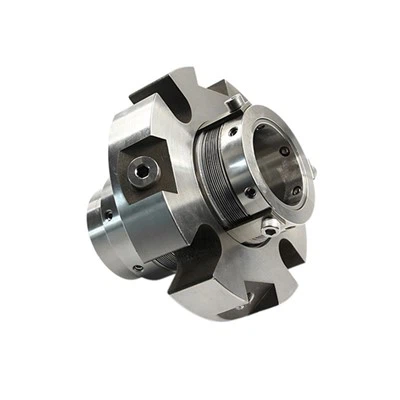
As a supplier of unbalanced mechanical seals, I understand the critical role that proper cooling methods play in ensuring the optimal performance and longevity of these seals. Unbalanced mechanical seals are commonly used in various industrial applications, and their efficient operation often depends on effective cooling. In this blog, we'll explore different types of cooling methods suitable for unbalanced mechanical seals.


Why Cooling is Necessary for Unbalanced Mechanical Seals
Unbalanced mechanical seals generate heat during operation due to friction between the sealing faces. If this heat is not dissipated effectively, it can lead to a range of problems. High temperatures can cause the seal faces to warp, which may result in leakage. Additionally, excessive heat can degrade the sealing materials, reducing their lifespan and performance. Therefore, implementing appropriate cooling methods is essential to maintain the integrity of the seal and prevent costly downtime.
1. Water Cooling
Water cooling is one of the most widely used methods for cooling unbalanced mechanical seals. It is effective because water has a high specific heat capacity, which means it can absorb a large amount of heat without a significant increase in temperature.
Direct Water Cooling
In direct water cooling, water is circulated directly around the seal chamber. This can be achieved by using a water jacket that surrounds the seal housing. The water absorbs the heat generated by the seal and carries it away. The cooled water is then continuously replaced with fresh, cooler water. This method provides a high level of cooling efficiency and is suitable for applications where the heat load is relatively high.
For example, in chemical processing plants, where pumps often handle corrosive and high - temperature fluids, direct water cooling can be used to protect the unbalanced mechanical seals. Our MOR 105 Chemical Mechanical Seal for Caustic Pump can benefit greatly from this type of cooling. The constant flow of water helps to keep the seal faces at a stable temperature, preventing thermal damage and ensuring reliable operation in harsh chemical environments.
Indirect Water Cooling
Indirect water cooling involves the use of a heat exchanger. The heat generated by the seal is transferred to a secondary fluid, which then passes through a heat exchanger where it is cooled by water. This method is useful when direct contact between the cooling water and the process fluid is not desirable, such as in food and beverage applications or when dealing with sensitive chemicals.
2. Air Cooling
Air cooling is a simple and cost - effective method for cooling unbalanced mechanical seals. It works by using air to carry away the heat generated by the seal.
Natural Air Cooling
Natural air cooling relies on the natural movement of air around the seal. This can be enhanced by providing proper ventilation around the seal housing. For example, in some industrial settings, the seal is installed in an open area where there is good air circulation. However, natural air cooling is only suitable for applications with relatively low heat loads.
Forced Air Cooling
Forced air cooling uses fans to blow air over the seal housing. This increases the rate of heat transfer and provides more efficient cooling compared to natural air cooling. Forced air cooling can be used in applications where the heat generation is moderate. It is also a good option when water is not readily available or when water cooling is not practical.
3. Oil Cooling
Oil cooling is often used in high - performance applications where a high level of cooling is required. Oil has good lubricating properties in addition to its cooling capabilities.
Oil Bath Cooling
In oil bath cooling, the seal is immersed in an oil bath. The oil absorbs the heat from the seal and dissipates it through a heat exchanger. This method provides excellent cooling and lubrication, which helps to reduce wear on the seal faces. Oil bath cooling is commonly used in high - speed rotating equipment, such as turbochargers and some high - pressure pumps. Our MOR Wilo High Pressure Pump Mechanical Seal can be effectively cooled using this method, ensuring smooth operation under high - pressure conditions.
Oil Circulation Cooling
Oil circulation cooling involves circulating oil through the seal chamber and then through a heat exchanger. The cooled oil is then returned to the seal chamber. This method provides a continuous supply of cool oil to the seal, maintaining a stable temperature.
4. Refrigerant Cooling
Refrigerant cooling is a highly efficient method for cooling unbalanced mechanical seals, especially in applications where extremely low temperatures are required. It uses a refrigerant, such as Freon, to absorb the heat from the seal.
The refrigerant is circulated through a closed - loop system. As it passes through the seal chamber, it absorbs the heat and evaporates. The vaporized refrigerant then passes through a compressor, where it is compressed and condensed back into a liquid. The condensed refrigerant is then cooled and recirculated. Refrigerant cooling is commonly used in cryogenic applications and some high - precision manufacturing processes.
Choosing the Right Cooling Method
When choosing a cooling method for unbalanced mechanical seals, several factors need to be considered:
Heat Load
The amount of heat generated by the seal is a crucial factor. High - heat applications, such as those involving high - speed rotation or high - pressure operation, require more efficient cooling methods, such as water cooling or refrigerant cooling.
Process Fluid
The nature of the process fluid can also influence the choice of cooling method. If the process fluid is corrosive or sensitive, indirect cooling methods may be more appropriate to prevent contamination.
Cost
The cost of implementing and maintaining the cooling system is an important consideration. Water cooling and air cooling are generally more cost - effective compared to refrigerant cooling, which requires more complex equipment.
Environmental Conditions
The availability of water and the ambient temperature can also affect the choice of cooling method. In areas with limited water supply, air cooling or oil cooling may be more practical.
Conclusion
Selecting the right cooling method for unbalanced mechanical seals is essential for ensuring their reliable operation and longevity. As a supplier of unbalanced mechanical seals, we offer a range of products, including the MOR 105 Chemical Mechanical Seal for Caustic Pump and MOR Wilo High Pressure Pump Mechanical Seal, which are designed to work effectively with different cooling methods.
If you are in need of unbalanced mechanical seals and are looking for advice on the most suitable cooling method for your application, we are here to help. Our team of experts can provide you with detailed information and guidance to ensure that you make the right choice. Contact us today to start a discussion about your specific requirements and explore how our products can meet your needs.
References
- "Mechanical Seals: Design and Application" by John A. Adamson
- "Handbook of Seal Technology" edited by Colin R. White
- Industry standards and guidelines related to mechanical seal cooling methods