Can a Teflon Mechanical Seal be Used in a High - Frequency Vibration Environment?
As a supplier of Teflon mechanical seals, I often receive inquiries from customers about the suitability of our products in various working conditions, especially in high - frequency vibration environments. In this blog post, I will explore whether Teflon mechanical seals can be effectively used in such challenging settings.
Understanding Teflon Mechanical Seals
Teflon, also known as polytetrafluoroethylene (PTFE), is a synthetic fluoropolymer with a range of remarkable properties. It has excellent chemical resistance, low friction coefficient, and high temperature resistance. These characteristics make Teflon an ideal material for mechanical seals, which are used to prevent leakage between two components in a fluid - handling system.
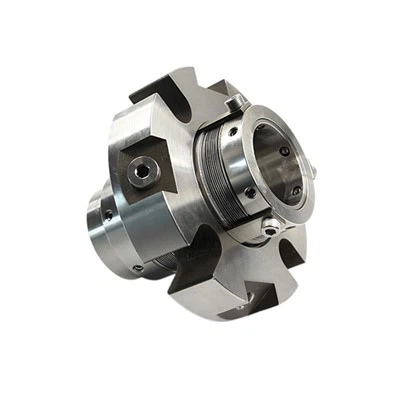
Mechanical seals are crucial components in pumps, compressors, and other rotating equipment. They work by creating a tight seal between the stationary and rotating parts, preventing the escape of fluids such as water, chemicals, or oil. Teflon mechanical seals are particularly popular in industries where chemical compatibility and low friction are essential, such as the chemical processing, food and beverage, and pharmaceutical industries.
High - Frequency Vibration Environments
High - frequency vibration environments are common in many industrial applications. For example, in some high - speed pumps, motor - driven equipment, or machinery with unbalanced rotating parts, high - frequency vibrations can occur. These vibrations can have a significant impact on the performance and lifespan of mechanical seals.
The main challenges posed by high - frequency vibrations include:
- Seating Instability: The vibrations can cause the mechanical seal faces to separate briefly, leading to leakage. Even small separations can allow fluid to escape, which may contaminate the surrounding environment or cause damage to other components.
- Wear and Tear: The continuous shaking can increase the friction between the seal faces, accelerating wear. This can reduce the seal's effectiveness and shorten its service life.
- Material Fatigue: High - frequency vibrations can cause material fatigue in the seal components, leading to cracks or fractures. This can ultimately result in seal failure.
Can Teflon Mechanical Seals Withstand High - Frequency Vibrations?
The answer is yes, but with certain considerations. Teflon's unique properties give it some advantages in high - frequency vibration environments.
- Low Friction: The low friction coefficient of Teflon helps to reduce the heat generated during operation, even under high - frequency vibrations. This can minimize the wear on the seal faces and extend the seal's lifespan.
- Flexibility: Teflon is a relatively flexible material. It can absorb some of the vibrations and adapt to small movements between the seal faces, reducing the risk of separation and leakage.
However, to ensure the reliable performance of Teflon mechanical seals in high - frequency vibration environments, the following factors need to be considered:
- Seal Design: The design of the mechanical seal plays a crucial role. A well - designed seal should be able to withstand the dynamic forces caused by vibrations. For example, seals with proper spring loading can maintain a constant pressure on the seal faces, preventing separation. Our company offers a variety of seal designs, such as the 502 Replacement Single Spring Bellow Mechanical Seal for Petrochemical Industry, which is designed to handle different operating conditions, including high - frequency vibrations.
- Installation: Proper installation is essential for the performance of mechanical seals. In high - frequency vibration environments, the seal must be installed correctly to ensure that it is properly aligned and centered. Any misalignment can increase the stress on the seal faces and lead to premature failure.
- Operating Conditions: The specific operating conditions, such as the frequency and amplitude of the vibrations, the temperature, and the type of fluid being sealed, need to be taken into account. For example, if the fluid contains abrasive particles, additional measures may be required to protect the seal.
Case Studies
To illustrate the effectiveness of Teflon mechanical seals in high - frequency vibration environments, let's look at some real - world examples.
In a chemical processing plant, a high - speed pump was experiencing frequent seal failures due to high - frequency vibrations. The original seals were made of a less flexible material and were unable to withstand the dynamic forces. After replacing them with our Teflon mechanical seals, specifically the MOR m7n mechanical seal, the problem was resolved. The Teflon seals were able to absorb the vibrations and maintain a tight seal, reducing leakage and downtime.
In another case, a food processing company was using a low - pressure pump with high - frequency vibrations. The previous seals were not suitable for the application, resulting in product contamination. By switching to our 208 Mechanical Seal Replacement for Pump with Low Pressure, which is made of Teflon, the company was able to improve the seal performance and ensure the quality of their products.


Conclusion
In conclusion, Teflon mechanical seals can be used in high - frequency vibration environments, provided that the appropriate design, installation, and operating conditions are considered. Their low friction and flexibility make them well - suited to handle the challenges posed by vibrations.
If you are facing issues with mechanical seals in high - frequency vibration applications, or if you are looking for reliable Teflon mechanical seals, we are here to help. Our team of experts can provide you with professional advice and customized solutions to meet your specific needs. Contact us to discuss your requirements and start a procurement negotiation.
References
- "Mechanical Seals Handbook" by John Neale
- "Materials Science and Engineering: An Introduction" by William D. Callister Jr. and David G. Rethwisch