Can chemical seals be used in vacuum applications? As a supplier of chemical seals, I often get this question from our customers. Let's dig deep into this topic to find out the answer.
First off, let's understand what chemical seals are. Chemical seals are devices used to separate the process medium from the pressure measuring instrument. They're typically filled with a sealing fluid, and this fluid transfers the pressure from the process to the measuring device. These seals are vital in scenarios where the process medium can damage the pressure sensor due to its corrosive, viscous, or high - temperature nature.
Now, when it comes to vacuum applications, things get a bit tricky. A vacuum is defined as a space entirely devoid of matter or a space with a pressure significantly lower than the atmospheric pressure. Using chemical seals in such an environment has its own set of challenges and considerations.
One of the main concerns in vacuum applications is the behavior of the sealing fluid. In a vacuum, the boiling point of the fluid can drop significantly. If the temperature of the process is anywhere near the reduced boiling point of the fluid, it could start to vaporize. When this happens, the fluid can no longer effectively transfer the pressure, and the accuracy of the pressure measurement goes out the window.
Another issue is the structural integrity of the chemical seal. The pressure differential between the vacuum on one side and the atmospheric or higher pressure inside the seal can put a lot of stress on the diaphragm of the seal. If the diaphragm isn't designed to handle this kind of pressure differential, it could rupture. This not only ruins the seal but could also lead to contamination of the process or damage to the measuring instrument.
However, it's not all doom and gloom. There are ways to use chemical seals in vacuum applications successfully. First, you need to choose the right sealing fluid. Some fluids have a very low vapor pressure, which means they're less likely to vaporize in a vacuum. These fluids are specifically formulated to maintain their liquid state under low - pressure conditions.
The design of the chemical seal also matters. A well - designed seal will have a diaphragm that can withstand the pressure differential. Some seals are reinforced or made from materials that are more resistant to the forces exerted in a vacuum environment.
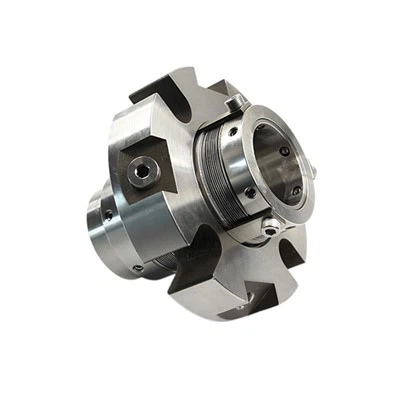
Let's talk about the types of chemical seals that might work better in vacuum applications. For instance, Equivalent to type 2 mechanical seal has features that make it more suitable for such low - pressure situations. Its construction and choice of materials can handle the unique challenges of vacuum.
Another option is the 208 Mechanical Seal Replacement for Pump with Low Pressure. This seal is engineered to ensure accurate pressure transfer even when dealing with pressures below atmospheric.
In some cases, you might be using a pump in a vacuum system. Our MOR Flygt 4560 Pump Mechanical Seal can provide the necessary sealing solution to keep the system running smoothly.
Now, I've mentioned these challenges and solutions, but how do you know if a chemical seal will work for your specific vacuum application? Well, it all boils down to understanding your process. You need to know the temperature range, the level of vacuum, and the nature of the process medium. This information will help in selecting the most appropriate chemical seal and sealing fluid.


If you're unsure about any of these aspects, don't worry. That's where we come in. As a professional chemical seal supplier, we have a team of experts who can analyze your process requirements. We'll go through all the details with you, from the type of fluid to use to the best - designed seal for your system.
We've been in the business for a long time, and we've dealt with all sorts of vacuum applications. Whether it's a small - scale laboratory setup or a large - scale industrial process, we have the knowledge and experience to provide you with the right chemical seal solution.
Getting in touch with us is easy. If you're looking to start a project or want to upgrade your existing vacuum system, reach out for a no - obligation chat. We can have an in - depth discussion about your needs, and we'll offer you the best options tailored to your situation.
In conclusion, chemical seals can be used in vacuum applications, but it requires careful consideration of various factors. By choosing the right seal, fluid, and design, you can ensure accurate pressure measurement and the long - term reliability of your vacuum system.
Don't let the complexity of vacuum applications hold you back. Contact us today to discuss your chemical seal requirements and let's find the perfect solution for your process.
References
- "Sealing Technology Handbook", Various authors, a comprehensive guide on different types of seals and their applications
- Industry - specific research papers on vacuum system engineering and the use of chemical seals in such environments.