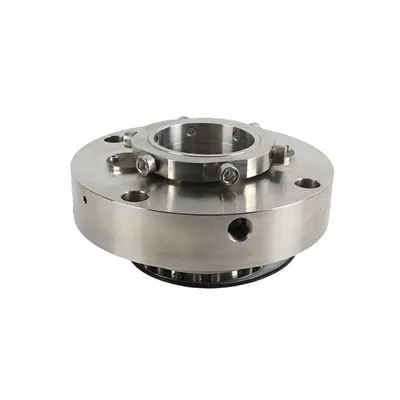
Quality control is a critical aspect in the production of pump mechanical seals. As a pump mechanical seal supplier, we understand the significance of maintaining high - quality standards to ensure the reliability and performance of our products. In this blog, we will explore the key quality control points in the production of pump mechanical seals.
Material Selection
The first and perhaps the most fundamental quality control point is material selection. The materials used in pump mechanical seals must be carefully chosen to withstand the specific operating conditions of the pumps. For example, in the petrochemical industry, where seals are exposed to harsh chemicals and high - pressure environments, materials with excellent chemical resistance and mechanical strength are required.
We often use materials such as carbon, ceramic, and various alloys. Carbon is commonly used for its self - lubricating properties and good resistance to wear. Ceramic materials offer high hardness and corrosion resistance, making them suitable for applications where the fluid contains abrasive particles. Alloys, on the other hand, can provide high strength and resistance to specific chemicals.
When selecting materials, we also consider factors like temperature, pressure, and the nature of the fluid being pumped. For instance, in high - temperature applications, we may choose materials with high thermal stability. We source our materials from trusted suppliers and conduct strict incoming inspections to ensure their quality. This includes checking for material certifications, dimensional accuracy, and physical properties.
Design and Engineering
The design of pump mechanical seals plays a crucial role in their performance. A well - designed seal should be able to effectively prevent leakage, reduce friction, and withstand the mechanical stresses during operation. Our engineering team uses advanced design software to model and simulate the performance of the seals under different conditions.
We pay special attention to the geometry of the seal faces. The flatness and parallelism of the seal faces are critical for achieving a good seal. Even a small deviation in these parameters can lead to leakage. We also design the seals to be compatible with different pump types and operating conditions. For example, some pumps require seals with a specific spring rate to ensure proper sealing force.


In addition, we conduct finite element analysis (FEA) to evaluate the stress distribution within the seal components. This helps us to identify potential weak points in the design and make necessary improvements. By continuously optimizing the design, we can enhance the performance and reliability of our pump mechanical seals.
Manufacturing Process Control
The manufacturing process is another key area for quality control. We have a well - established manufacturing process that includes precision machining, heat treatment, and assembly.
During machining, we use high - precision equipment to ensure the dimensional accuracy of the seal components. Tolerances are strictly controlled to meet the design requirements. For example, the diameter of the seal shaft and the width of the seal faces must be within a very narrow range. Any deviation from the specified dimensions can affect the sealing performance.
Heat treatment is also an important step in the manufacturing process. It can improve the mechanical properties of the materials, such as hardness and toughness. We carefully control the heat treatment parameters, including temperature, time, and cooling rate, to ensure consistent quality.
Assembly is the final stage of the manufacturing process. It requires careful handling and precise alignment of the components. We have trained technicians who follow strict assembly procedures to ensure that all components are properly installed. For example, the springs must be installed with the correct pre - load to provide the necessary sealing force.
Testing and Inspection
Testing and inspection are essential quality control measures to ensure that the pump mechanical seals meet the required standards. We conduct a series of tests on each seal before it leaves our factory.
Leakage testing is one of the most important tests. We use specialized equipment to measure the leakage rate of the seals under different pressure and temperature conditions. A seal that exceeds the specified leakage limit is considered defective and will not be shipped to the customer.
We also perform performance tests to evaluate the seal's ability to withstand different operating conditions. This includes tests for friction, wear, and temperature resistance. By conducting these tests, we can identify any potential issues with the seal's performance and make necessary adjustments.
In addition to testing, we conduct regular inspections throughout the manufacturing process. This includes visual inspections, dimensional inspections, and material inspections. Visual inspections can detect surface defects such as cracks or scratches, while dimensional inspections ensure that the components meet the design specifications.
Documentation and Traceability
Proper documentation and traceability are important for quality control. We maintain detailed records of the manufacturing process, including material specifications, machining parameters, and test results. This documentation allows us to track the history of each seal and identify any potential quality issues.
In case of a quality problem, we can quickly trace back to the source of the issue, whether it is a material defect, a manufacturing error, or a design flaw. This helps us to take appropriate corrective actions and prevent similar problems from occurring in the future.
Our Product Offerings
As a pump mechanical seal supplier, we offer a wide range of products to meet the diverse needs of our customers. For example, we have the 502 Replacement Single Spring Bellow Mechanical Seal for Petrochemical Industry, which is specifically designed for the petrochemical industry. This seal is made of high - quality materials and has excellent chemical resistance and sealing performance.
We also have the Equivalent to type 2 mechanical seal, which is a reliable and cost - effective solution for many pump applications. This seal is designed to provide a good balance between performance and price.
In addition, our MOR 527 compressor mechanical seal is suitable for compressor applications. It is engineered to withstand high - pressure and high - speed operating conditions.
Conclusion
Quality control is a comprehensive process that involves every stage of the production of pump mechanical seals, from material selection to testing and inspection. By implementing strict quality control measures, we can ensure that our products meet the highest standards of performance and reliability.
If you are in the market for high - quality pump mechanical seals, we invite you to contact us for procurement and further discussions. We are committed to providing you with the best products and services to meet your specific needs.
References
- ASME B73.1 - 2015, Centrifugal Pumps for Chemical Process.
- API 682 - 4th Edition, Pumps - Shaft Sealing Systems for Centrifugal and Rotary Pumps.
- ISO 21049:2008, Petroleum, petrochemical and natural gas industries - Mechanical seals for centrifugal pumps.