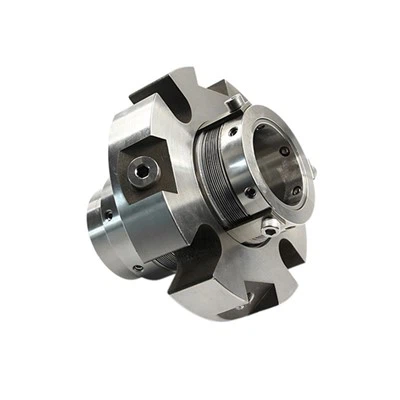
Hey there! As a cartridge seal supplier, I often get asked about the size requirements for cartridge seals. It's a crucial topic because getting the right size is like finding the perfect fit for a puzzle piece – it ensures everything works smoothly. So, let's dive into this and break down what you need to know.
Why Size Matters
First off, why are size requirements so important? Well, a cartridge seal that's too big or too small can cause all sorts of problems. If it's too big, it won't fit properly in the equipment, leading to leaks and potential damage to the machinery. On the other hand, a seal that's too small might not provide an adequate seal, also resulting in leaks and reduced efficiency. In short, the right size is essential for optimal performance and longevity of the equipment.
Key Dimensions to Consider
When it comes to determining the size of a cartridge seal, there are several key dimensions to take into account.
Shaft Diameter
The shaft diameter is one of the most critical dimensions. It's the measurement of the shaft around which the seal will be installed. You need to measure this accurately because the seal must fit snugly around the shaft. A misfit here can lead to excessive wear and tear on the seal and the shaft itself. For example, if you're working with a pump, you'll need to measure the diameter of the pump shaft precisely.
Bore Size
The bore size refers to the inner diameter of the housing where the seal will be placed. This dimension is just as important as the shaft diameter. The seal has to fit properly inside the housing to create an effective seal. If the bore size is incorrect, the seal might not be able to compress correctly, leading to leaks.
Overall Length
The overall length of the cartridge seal is also crucial. It needs to fit within the available space in the equipment. If the seal is too long, it might not fit at all, or it could cause interference with other components. Conversely, a seal that's too short might not provide the necessary sealing surface.
Measuring for the Right Size
Now that we know what dimensions are important, how do we measure them correctly?
Use the Right Tools
You'll need some basic measuring tools, such as a caliper. A caliper allows you to measure the shaft diameter and bore size accurately. Make sure the caliper is in good condition and calibrated correctly. You can also use a ruler for measuring the overall length, but a caliper will give you more precise measurements.
Take Multiple Measurements
Don't rely on just one measurement. Take several measurements at different points along the shaft and the bore to ensure accuracy. Sometimes, there might be slight variations in the dimensions, and taking multiple measurements will help you account for these variations.
Consider Tolerances
Keep in mind that there are always tolerances when it comes to manufacturing. Tolerances are the acceptable range of variation in the dimensions. For example, if the specified shaft diameter is 50 mm with a tolerance of ±0.1 mm, the actual shaft diameter can be anywhere between 49.9 mm and 50.1 mm. You need to take these tolerances into account when selecting a cartridge seal.


Our Product Sizes
At our company, we offer a wide range of cartridge seals in different sizes to meet various needs. For instance, we have the MOR 8B1D reactor double mechanical seal, which comes in several sizes to fit different shaft diameters and bore sizes. This seal is designed for high-pressure applications and provides excellent sealing performance.
Another popular product is the MOR HRM Mechancial Seal. It's available in a variety of sizes and is suitable for a wide range of industries, including chemical processing and food and beverage.
We also have the MOR 122 Double Cartridge Mechanical Seal, which is known for its reliability and durability. It's available in different sizes to accommodate different equipment requirements.
Custom Sizes
In some cases, you might need a cartridge seal in a custom size. Maybe you have a unique piece of equipment that requires a non-standard size. Don't worry – we can help with that. We have the capability to manufacture custom-sized cartridge seals to meet your specific needs. Just provide us with the exact dimensions, and we'll work with you to create a seal that fits perfectly.
How to Order the Right Size
Ordering the right size cartridge seal is easy. Just follow these steps:
- Measure the shaft diameter, bore size, and overall length accurately.
- Check our product catalog to see if we have a seal that matches your measurements. If you're not sure, you can contact our customer service team, and they'll help you find the right seal.
- If you need a custom size, provide us with the detailed dimensions and any other specifications. We'll then give you a quote and let you know the lead time for manufacturing.
Conclusion
In conclusion, getting the right size for cartridge seals is crucial for the proper functioning of your equipment. By considering the key dimensions, measuring accurately, and choosing the right product, you can ensure a reliable and long-lasting seal. If you have any questions or need help with sizing, don't hesitate to reach out. We're here to assist you in finding the perfect cartridge seal for your needs. Whether you're looking for a standard size or a custom one, we've got you covered. So, if you're in the market for a cartridge seal, contact us today to start the procurement process and get the best sealing solution for your equipment.
References
- Mechanical Seals Handbook, John S. Watson
- Sealing Technology: Principles and Practice, Robert D. Bansal