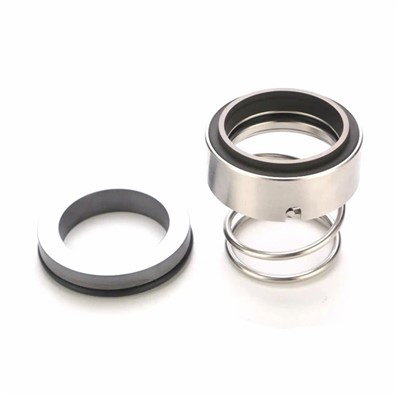
As a PTFE bellow seal supplier, I often receive inquiries about the fatigue life of PTFE bellow seals. Understanding the fatigue life of these seals is crucial for ensuring the long - term performance and reliability of various industrial applications. In this blog, I will delve into the factors that affect the fatigue life of PTFE bellow seals and provide some insights on how to optimize it.
What is PTFE Bellow Seal?
PTFE (Polytetrafluoroethylene) bellow seals are widely used in industries due to their excellent chemical resistance, low friction coefficient, and high temperature tolerance. The bellows design provides flexibility, allowing the seal to accommodate axial, radial, and angular movements. This makes them suitable for a variety of applications, including pumps, compressors, and other rotating equipment.
Factors Affecting the Fatigue Life of PTFE Bellow Seals
1. Material Properties
The quality and properties of the PTFE material play a significant role in determining the fatigue life of the bellow seal. High - quality PTFE with proper additives and processing can enhance its mechanical strength, wear resistance, and resistance to chemical attack. For example, PTFE with a high molecular weight generally has better mechanical properties and can withstand more cycles of deformation without failure.
2. Operating Conditions
- Temperature: Extreme temperatures can have a profound impact on the fatigue life of PTFE bellow seals. At high temperatures, PTFE may become softer, reducing its mechanical strength and increasing the risk of deformation. On the other hand, low temperatures can make PTFE more brittle, leading to cracking.
- Pressure: High pressure can cause excessive stress on the bellow seal, accelerating fatigue. The seal must be designed to withstand the operating pressure without failure. For instance, in high - pressure applications, the bellow may need to be thicker or have a more robust design.
- Speed: The rotational speed of the equipment can also affect the fatigue life. Higher speeds can generate more heat and mechanical stress on the seal, increasing the likelihood of fatigue failure.
3. Installation and Alignment
Proper installation and alignment are essential for maximizing the fatigue life of PTFE bellow seals. Incorrect installation can cause uneven stress distribution on the bellow, leading to premature failure. For example, if the seal is not centered correctly, it may experience excessive bending or torsion, which can accelerate fatigue.
4. Fluid Compatibility
The compatibility of the PTFE bellow seal with the fluid being sealed is crucial. Some chemicals can react with PTFE, causing swelling, degradation, or loss of mechanical properties. It is important to select a PTFE material that is compatible with the specific fluid in the application.
Measuring and Predicting Fatigue Life
There are several methods for measuring and predicting the fatigue life of PTFE bellow seals. One common approach is to conduct accelerated life tests in a laboratory setting. These tests involve subjecting the seal to a higher level of stress and temperature than normal operating conditions to simulate long - term use in a shorter period.
Another method is to use finite element analysis (FEA) to model the behavior of the bellow seal under different operating conditions. FEA can help predict stress distribution, deformation, and potential failure points, allowing for the optimization of the seal design.
Improving the Fatigue Life of PTFE Bellow Seals
1. Material Selection
Choose high - quality PTFE materials with appropriate additives and properties for the specific application. Consider factors such as chemical resistance, mechanical strength, and temperature tolerance.
2. Design Optimization
Optimize the design of the bellow seal to reduce stress concentration and improve flexibility. This may involve adjusting the bellow geometry, thickness, and number of convolutions.
3. Proper Installation and Maintenance
Ensure proper installation and alignment of the seal to avoid uneven stress distribution. Regular maintenance, such as inspection and replacement of worn parts, can also help extend the fatigue life of the seal.
4. Monitoring and Control
Implement a monitoring system to track the performance of the PTFE bellow seal. This can include monitoring temperature, pressure, and vibration to detect any signs of potential failure early.
Related Products
In addition to PTFE bellow seals, we also offer a range of other mechanical seals that may be of interest to you. For example, our Equivalent to M32 sewage pump mechanical seal is a reliable solution for sewage pump applications. It provides excellent sealing performance and long - term durability.
We also have the John Crane 112 Replacement Unbalanced mechanical seal, which is designed to replace the original John Crane 112 seal. This seal offers high - quality performance and is suitable for a variety of industrial applications.
Another product is the 208 Mechanical Seal Replacement for Pump with Low Pressure. It is specifically designed for low - pressure pump applications and provides reliable sealing.


Conclusion
The fatigue life of PTFE bellow seals is influenced by various factors, including material properties, operating conditions, installation, and fluid compatibility. By understanding these factors and taking appropriate measures to optimize the design, installation, and maintenance of the seals, we can extend their fatigue life and ensure the reliable operation of industrial equipment.
If you are interested in our PTFE bellow seals or other mechanical seal products, please feel free to contact us for further discussion and procurement. We are committed to providing high - quality products and excellent customer service.
References
- Brown, R. A. (2010). Handbook of Seal Technology. Elsevier.
- Smith, J. D. (2015). Mechanical Seals: Principles and Applications. CRC Press.