


What are the vibration effects on a single coil mechanical seal?
As a supplier of single coil mechanical seals, I've witnessed firsthand the critical role these components play in various industrial applications. Single coil mechanical seals are designed to prevent leakage of fluids in pumps, compressors, and other rotating equipment. However, one factor that can significantly impact their performance is vibration. In this blog post, I'll delve into the vibration effects on a single coil mechanical seal, exploring the causes, consequences, and potential solutions.
Causes of Vibration in Single Coil Mechanical Seals
Vibration in single coil mechanical seals can stem from multiple sources. One of the primary causes is unbalanced rotating parts within the equipment. When the impeller or shaft of a pump is not properly balanced, it can create uneven forces during rotation. These forces are transmitted to the mechanical seal, causing it to vibrate. For example, in a sewage pump, if the impeller has accumulated debris or has manufacturing defects, it can lead to imbalance and subsequent vibration.
Another common cause is misalignment. When the pump and motor are not aligned correctly, it can result in excessive radial and axial forces on the mechanical seal. This misalignment can occur during installation or due to thermal expansion and contraction of the equipment over time. For instance, in a high - pressure pump system where temperature variations are significant, the thermal growth of the components can cause misalignment and vibration.
Fluid - induced vibrations are also a significant factor. Turbulence in the fluid flow, cavitation, or pressure pulsations can all generate vibrations in the mechanical seal. In a chemical pump handling caustic fluids, cavitation can occur when the pressure in the fluid drops below the vapor pressure, creating bubbles that collapse and cause vibrations.
Consequences of Vibration on Single Coil Mechanical Seals
The vibration effects on a single coil mechanical seal can be far - reaching and detrimental to its performance and longevity. One of the most immediate consequences is increased wear. The constant vibrations cause the sealing faces of the mechanical seal to rub against each other more aggressively. This accelerated wear can lead to premature failure of the seal, resulting in fluid leakage. For example, if the seal faces wear down too quickly, the seal may not be able to maintain the required pressure differential, and the fluid being pumped will leak out.
Vibration can also cause damage to the secondary sealing elements. The O - rings or gaskets in the mechanical seal are designed to provide additional sealing and prevent leakage around the seal. However, vibrations can cause these elements to shift or become deformed, compromising their sealing ability. In a high - pressure application, a damaged O - ring can lead to a significant loss of pressure and reduced efficiency of the pump.
Moreover, vibration can affect the stability of the single coil in the mechanical seal. The coil is responsible for providing the necessary spring force to keep the sealing faces in contact. Excessive vibration can cause the coil to break or lose its elasticity, resulting in insufficient sealing force. This can further exacerbate the problem of leakage and reduce the overall performance of the mechanical seal.
Impact on Different Types of Single Coil Mechanical Seals
Let's take a look at how vibrations affect some specific types of single coil mechanical seals. For the Equivalent to John Crane Type 21 Single Marine Mechanical Seal for Sewage Pump, the harsh marine environment with its constant movement and vibration from the ship's engine and wave action can take a toll on the seal. The vibrations can cause the seal faces to wear unevenly, leading to leakage of sewage into the marine environment, which is not only a safety hazard but also an environmental concern.

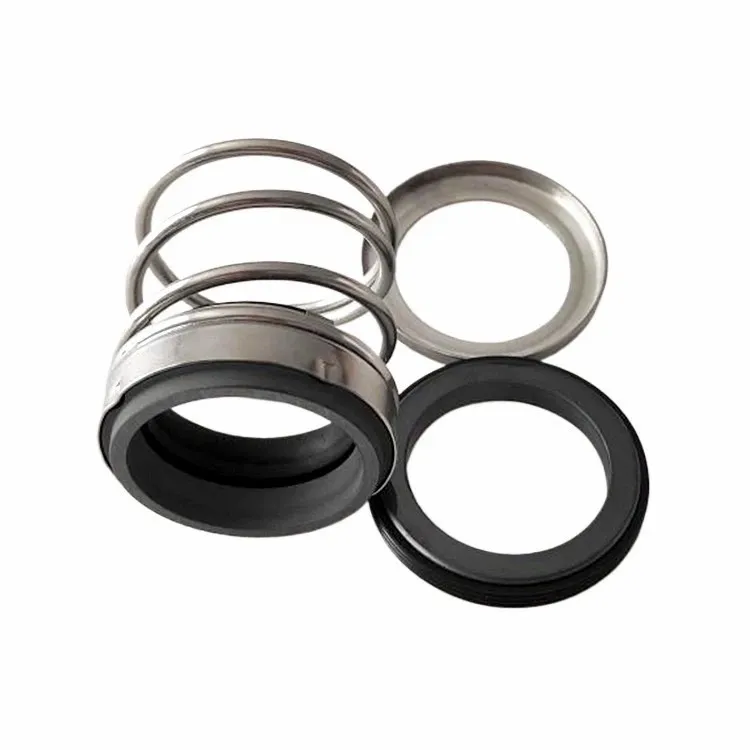
In the case of the MOR Wilo High Pressure Pump Mechanical Seal, high - pressure applications already put a lot of stress on the mechanical seal. Vibration can amplify this stress, causing the seal to fail prematurely. The vibrations can also lead to pressure fluctuations within the seal chamber, which can further damage the sealing elements.
For the MOR 105 Chemical Mechanical Seal for Caustic Pump, the caustic nature of the fluid being pumped makes the seal more vulnerable. Vibration can cause the fluid to penetrate the seal more easily, corroding the components and reducing the effectiveness of the seal. This can lead to leaks of potentially dangerous chemicals, putting the operators and the environment at risk.
Solutions to Mitigate Vibration Effects
To address the vibration effects on single coil mechanical seals, several solutions can be implemented. Firstly, proper balancing of the rotating parts is crucial. Regular maintenance and inspection of the impeller and shaft can help identify and correct any imbalance issues. Using balancing equipment during installation and as part of routine maintenance can ensure smooth operation and reduce vibration.
Correct alignment of the pump and motor is also essential. Precision alignment tools should be used during installation to ensure accurate alignment. Additionally, expansion joints can be installed to accommodate thermal expansion and contraction and prevent misalignment due to temperature changes.
In terms of fluid - induced vibrations, improving the fluid flow characteristics can be effective. Installing flow straighteners or diffusers can reduce turbulence and pressure pulsations in the fluid. Proper pump sizing and selection can also help minimize the risk of cavitation.
Another solution is to select high - quality, vibration - resistant single coil mechanical seals. The design of the seal should be able to withstand vibrations and maintain its sealing performance. Some seals are equipped with features such as damping systems or flexible sealing elements to reduce the impact of vibrations.
Benefits of Choosing the Right Single Coil Mechanical Seal
Selecting the appropriate single coil mechanical seal can bring numerous benefits. A well - designed and vibration - resistant seal can significantly reduce the risk of leakage, ensuring the safety and efficiency of the equipment. This, in turn, can lead to lower maintenance costs as there will be fewer seal replacements and less downtime for repairs.
In addition, choosing a high - quality seal can improve the overall performance of the pump or other equipment. With reduced vibration, the equipment can operate more smoothly, resulting in better energy efficiency and longer service life.
Conclusion
In conclusion, vibration can have a substantial impact on the performance and longevity of single coil mechanical seals. As a supplier, I understand the importance of providing seals that can withstand these vibrations. By understanding the causes and consequences of vibration, and implementing the appropriate solutions, we can ensure that our single coil mechanical seals perform optimally in various industrial applications.
If you are in the market for high - quality single coil mechanical seals or have any questions about vibration effects and solutions, I encourage you to reach out for a procurement discussion. Our team of experts is ready to provide you with the best advice and products to meet your specific needs.
References
- E. R. Booser, "Handbook of Lubrication and Tribology, Volume III: Applications and Design", CRC Press, 2001
- A. W. Lebeck, "Mechanical Seals: Design and Practice", Taylor & Francis, 1991


