

The technical features of dry gas seals mainly include the following aspects:
Non-contact seal: Dry gas seals form an air film to separate the dynamic and static rings by opening a fluid dynamic pressure groove on the dynamic ring, avoiding friction and wear in traditional mechanical seals, thereby extending the service life of the seal and the host equipment.
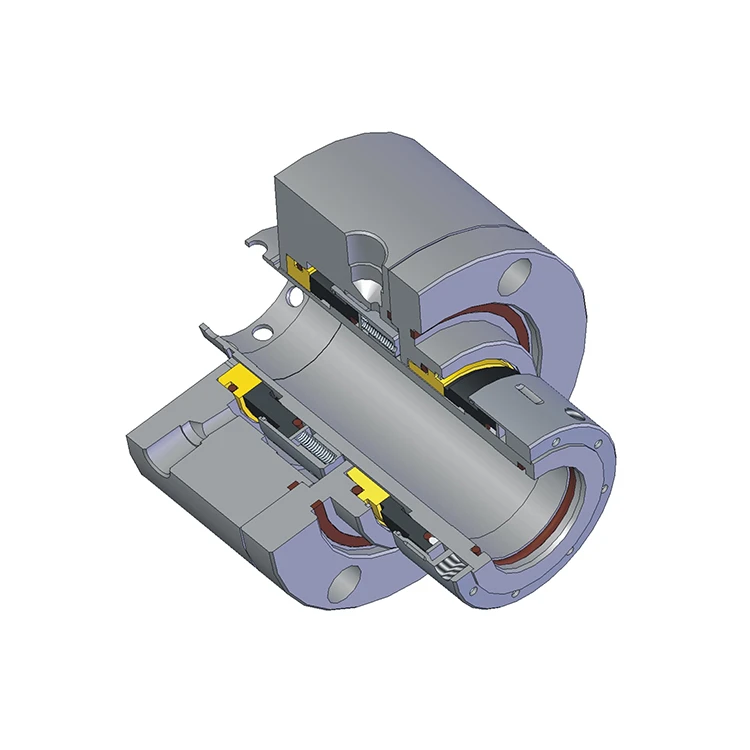
Energy saving and high efficiency: When the dry gas seal is in operation, the gas dynamic pressure effect generated by the rotation of the dynamic ring separates the sealing surfaces, reducing friction and energy consumption. Experiments show that the power consumption of dry gas seals is only about 5% of that of wet seals, and the energy consumption of its auxiliary system is also very low, so it is an energy-saving seal3.
Automatic balance: Dry gas seals work based on the principle of force balance, and can automatically adjust under different working conditions to maintain stable separation of the sealing surfaces without external adjustment.
Wide range of application: Dry gas seals are particularly suitable for high-speed and high-pressure equipment, such as compressors, pumps, etc., and can maintain a stable sealing effect under harsh working conditions.
Complex structure: The structure of dry gas seal is relatively complex, and the manufacturing and installation precision requirements are high. The gas source needs to be finely filtered to ensure the stability of the gas film and the sealing effect. Low maintenance cost: Due to the non-contact design and low friction and wear of dry gas seal, its maintenance cost is low and the operating cost is relatively low.


