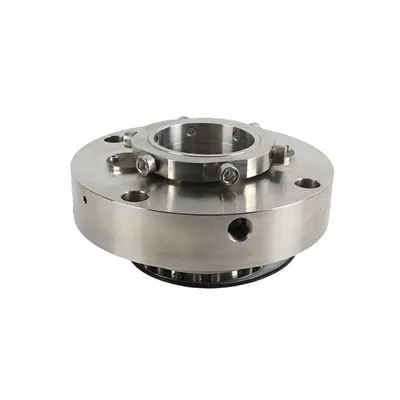
Chemical seals are indispensable components in many industrial pressure measurement systems, especially in situations where the process medium is corrosive, viscous, or contains solids that could potentially damage or foul a pressure sensor. As a chemical seal supplier, I've witnessed firsthand the complexities and variations in how these seals can impact the response time of pressure measurement devices.
Understanding Chemical Seals
Chemical seals work by isolating the pressure sensor from the process medium. The seal is filled with a liquid (usually a silicone oil or a similar incompressible fluid), and when the process pressure acts on the diaphragm of the chemical seal, this internal fluid transfers the pressure to the pressure-sensing element. This setup protects the pressure sensor, but it also introduces certain factors that can influence the response time of the overall pressure measurement.
One of the fundamental factors is the physical characteristics of the filling fluid. The viscosity of the fluid plays a crucial role. Higher viscosity fluids are more resistant to flow. When the process pressure changes, a highly viscous filling fluid will take longer to transmit this change to the pressure sensor. This delay can be significant in applications where rapid pressure fluctuations are common, such as in hydraulic systems or some chemical reaction processes.
Impact of Seal Geometry
The design and geometry of the chemical seal also have a profound effect on response time. Seals with a larger internal volume require more of the filling fluid to be displaced when the pressure changes. This additional volume of fluid needs more time to move and transmit the pressure, resulting in a slower response. For example, in large - scale industrial reactors where the chemical seal has to cover a relatively large area of the process vessel, the response time can be substantially affected by the seal's internal volume.
The thickness and flexibility of the diaphragm are other important geometric factors. A thicker diaphragm is more rigid and less responsive to pressure changes. It takes more force to deform the diaphragm, and this translates into a longer time for the pressure change to be transferred to the filling fluid and then to the pressure sensor. In contrast, a thinner and more flexible diaphragm can deform more readily, reducing the response time.
Sensor Compatibility and Installation
The type of pressure sensor used in conjunction with the chemical seal is another key consideration. Different sensors have different sensitivities and response characteristics. If the sensor has a slow response time on its own, the addition of a chemical seal will further exacerbate the issue. For instance, some older - generation sensors may have mechanical components that take time to adjust to pressure changes, and when combined with a chemical seal, the overall response time can be unacceptably long for high - speed applications.
Proper installation is also critical. If the chemical seal is not installed correctly, there may be air bubbles in the filling fluid. Air is compressible, which means that when the pressure changes, the air bubbles will first compress or expand instead of immediately transmitting the pressure to the sensor. This can cause a significant delay in the pressure measurement response. Additionally, improper installation can lead to mechanical stress on the diaphragm or the sensor, which may also affect the response time.


Real - World Applications and Case Studies
In the oil and gas industry, pressure measurement is vital for safety and efficient operation. Consider a well - head pressure measurement system. The process medium is often a mixture of oil, gas, and water, which can be highly corrosive and contain solid particles. A chemical seal is used to protect the pressure sensor. However, in this application, rapid pressure changes can occur due to changes in production rates or well conditions. If the chemical seal is not properly selected, the response time may be too slow to detect sudden pressure spikes, which could pose a serious safety risk.
For example, in a recent project, a client in the petrochemical industry was experiencing issues with the response time of their pressure measurement system. They were using a chemical seal with a relatively high - viscosity filling fluid and a thick diaphragm. The system was unable to accurately measure the rapid pressure changes during the start - up and shut - down phases of a chemical reactor. After replacing the chemical seal with a model that had a lower - viscosity filling fluid and a thinner diaphragm, the response time improved significantly, allowing for better control of the reactor process.
Solutions for Improving Response Time
As a chemical seal supplier, I can offer several solutions to improve the response time of pressure measurement systems. First, we can recommend the appropriate filling fluid based on the application requirements. For applications where rapid response is crucial, a low - viscosity fluid should be used. However, it's important to also consider the chemical compatibility of the fluid with the process medium and the operating temperature range.
Second, we can assist in selecting the right seal geometry. This involves choosing a seal with an optimal internal volume and diaphragm thickness. For high - speed applications, seals with smaller internal volumes and thinner diaphragms are generally preferred.
We also provide guidance on sensor selection and installation. Ensuring that the pressure sensor is compatible with the chemical seal and that the installation is done correctly can go a long way in improving the overall response time.
Our Product Offerings
In our product portfolio, we offer a variety of chemical seals to meet different customer needs. For example, we have John Crane 112 Replacement Unbalanced mechanical seal, which is designed for high - pressure applications and has been optimized to provide a relatively fast response time. The MOR m7n mechanical seal is another excellent choice, especially for applications where the process medium is highly corrosive. It features a robust design and a carefully selected filling fluid to ensure accurate and timely pressure measurement. Additionally, our Replacement for Type 8 Oil and Gas Rubber Bellow Seal is suitable for oil and gas applications, offering good response characteristics even in harsh environments.
Contact Us for Procurement
If you're in the market for chemical seals and are concerned about the response time of your pressure measurement system, we'd love to help. As a professional chemical seal supplier, we have the expertise and product range to meet your specific requirements. Contact us to start a discussion about your application, and we'll work with you to find the best solution for your pressure measurement needs.
References
[1] Smith, J. (2018). Pressure Measurement in Industrial Processes. Industrial Press.
[2] Johnson, A. (2019). Chemical Seals: Principles and Applications. Chemical Engineering Journal.
[3] Brown, C. (2020). Improving Response Time in Pressure Measurement Systems. Instrumentation Technology Magazine.