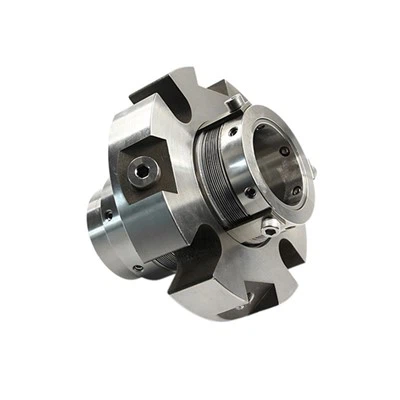
Hey there, folks! As a supplier of single coil mechanical seals, I've been keeping a close eye on how new technologies are shaping up our industry. In this blog, I'll chat about how these shiny new technologies are going to impact the development of single coil mechanical seals.
First off, let's talk about what single coil mechanical seals are. They're a crucial component in a whole bunch of industrial applications, like pumps, compressors, and mixers. Their main job is to prevent the leakage of fluids, whether it's liquids or gases, from the equipment. And they do this by creating a tight seal between two surfaces that are moving relative to each other.
Now, let's dive into how new technologies are going to shake things up.
1. Material Science Advancements
One of the most significant areas where new technologies are making an impact is in material science. We're seeing the development of new materials that are stronger, more durable, and more resistant to wear and tear. For example, advanced ceramics are becoming increasingly popular in single coil mechanical seals. These ceramics have excellent hardness and chemical resistance, which means they can withstand harsh operating conditions.


Another exciting development is the use of composite materials. Composites combine the best properties of different materials, like the strength of metals and the corrosion resistance of polymers. This allows us to create single coil mechanical seals that are not only more reliable but also lighter and more cost - effective.
These new materials are going to extend the lifespan of single coil mechanical seals. That's great news for our customers because it means fewer replacements and less downtime for their equipment. If you're looking for a high - quality mechanical seal made from advanced materials, you might be interested in the John Crane 112 Replacement Unbalanced mechanical seal. It's designed to offer excellent performance and durability.
2. Digitalization and IoT
The Internet of Things (IoT) is revolutionizing every industry, and the mechanical seal business is no exception. With IoT, we can now equip single coil mechanical seals with sensors that collect real - time data on things like temperature, pressure, and vibration.
This data is then transmitted to a central system where it can be analyzed. By monitoring these parameters, we can detect early signs of wear, damage, or malfunctions. For example, if the temperature of a seal suddenly spikes, it could indicate that there's a problem with lubrication or alignment.
Predictive maintenance is one of the biggest benefits of IoT in single coil mechanical seals. Instead of waiting for a seal to fail, we can use the data to schedule maintenance at the most appropriate time. This saves our customers money on unnecessary repairs and replacements and also improves the overall efficiency of their operations.
The Equivalent to type 2 mechanical seal could be integrated with IoT sensors in the future. This would allow for better monitoring and management of the seal's performance.
3. 3D Printing
3D printing is a game - changer for the manufacturing of single coil mechanical seals. It offers a level of flexibility and customization that was previously impossible. With traditional manufacturing methods, creating complex seal designs could be expensive and time - consuming.
But with 3D printing, we can produce custom - made single coil mechanical seals in a matter of hours. This is a huge advantage for customers who have unique requirements or need to replace a seal quickly.
3D printing also allows us to optimize the design of single coil mechanical seals. We can create internal structures that improve the seal's performance, such as better fluid flow channels or enhanced heat dissipation.
The MOR 58U 59U Mechanical Seal for Centrifugal Pump could potentially benefit from 3D printing technology. Custom - printed versions of this seal could be designed to fit specific pump models more precisely, improving the overall efficiency of the pump.
4. Nanotechnology
Nanotechnology is another area that's starting to influence the development of single coil mechanical seals. At the nanoscale, materials can exhibit unique properties that are not seen at the macroscale. For example, nanocoatings can be applied to the surfaces of mechanical seals to reduce friction and wear.
These nanocoatings can also improve the seal's resistance to corrosion and chemical attack. By using nanotechnology, we can enhance the performance of single coil mechanical seals and make them more reliable in challenging environments.
5. Challenges and Considerations
Of course, with all these new technologies come some challenges. One of the main challenges is cost. Implementing new technologies like IoT sensors or 3D printing can be expensive, at least initially. We need to find a way to balance the cost with the benefits that these technologies offer.
Another challenge is the need for skilled technicians. As single coil mechanical seals become more advanced, we need people who know how to install, operate, and maintain them. We're going to have to invest in training programs to ensure that our customers and employees are up to speed with the latest technologies.
6. The Future of Single Coil Mechanical Seals
Looking ahead, I'm really excited about the future of single coil mechanical seals. I think the combination of these new technologies is going to lead to seals that are more reliable, efficient, and cost - effective.
We're going to see a greater focus on sustainability as well. New materials and manufacturing processes are being developed that are more environmentally friendly. For example, some of the new composite materials are made from recycled materials, and 3D printing produces less waste compared to traditional manufacturing methods.
7. Let's Connect
If you're in the market for single coil mechanical seals or want to learn more about how these new technologies can benefit your operations, I'd love to chat. Whether you need a high - performance seal for a specific application or are just interested in exploring the latest advancements in the industry, I'm here to help. Reach out to me, and we can start a conversation about how I can meet your needs.
References
- Material Science Journals on advanced ceramics and composites
- Industry reports on IoT in mechanical equipment
- Research papers on 3D printing applications in manufacturing
- Nanotechnology research publications related to surface coatings