


Yo! As a supplier of PTFE bellow seals, I've got a ton to share about the surface treatments available for these bad boys. PTFE, or polytetrafluoroethylene, is an amazing material known for its non - stick properties, chemical resistance, and low friction. But when it comes to PTFE bellow seals, surface treatments can take their performance to a whole new level.
1. Coating Treatments
One of the most common surface treatments for PTFE bellow seals is coating. There are several types of coatings that can be applied, each with its own set of benefits.
Ceramic Coatings
Ceramic coatings are super popular. They offer excellent wear resistance. When a PTFE bellow seal is in operation, it often rubs against other components. This constant friction can cause wear over time. A ceramic coating acts as a protective layer, reducing the amount of wear and tear. This means the seal will last longer, saving you time and money on replacements. For instance, in industrial pumps where the seal has to withstand high - pressure and high - speed conditions, a ceramic - coated PTFE bellow seal like the 212 Multi Spring Balanced Teflon Bellow Mechanical Seal can be a real game - changer.
Diamond - Like Carbon (DLC) Coatings
DLC coatings are another great option. They have a low coefficient of friction, which is awesome for reducing energy consumption. When the seal moves with less friction, the equipment it's installed in doesn't have to work as hard. This can lead to significant energy savings, especially in large - scale industrial applications. Also, DLC coatings are very hard and have good chemical resistance, making them suitable for harsh chemical environments.
2. Plasma Treatment
Plasma treatment is a bit more high - tech. It involves exposing the PTFE surface to a plasma environment. This modifies the chemical and physical properties of the surface.

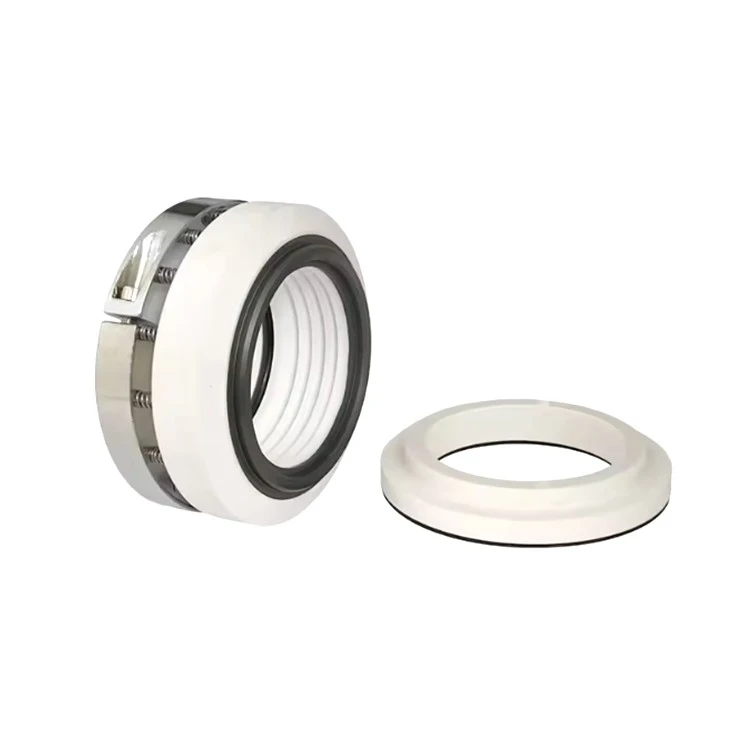
The main advantage of plasma treatment is that it improves the adhesion of the PTFE. In some cases, you might want to bond the PTFE bellow seal to other materials, like metal components. Plasma treatment can make this bonding process much stronger. It also can enhance the wettability of the PTFE, which is useful in applications where the seal needs to come into contact with liquids. For example, in a chemical processing plant where the seal has to deal with various corrosive liquids, a plasma - treated PTFE bellow seal can ensure a better seal and prevent leaks.
3. Texturing
Texturing the surface of a PTFE bellow seal is another effective treatment. There are different ways to create texture on the PTFE surface, such as micro - machining or laser texturing.
Texturing can improve the seal's performance in several ways. First, it can increase the contact area between the seal and the mating surface. This leads to a better seal, reducing the chances of leakage. Second, the texture can act as a reservoir for lubricants. In applications where lubrication is crucial, the textured surface can hold the lubricant in place, ensuring smooth operation. For example, in a mechanical system like the MOR m7n mechanical seal, a textured PTFE bellow seal can enhance its overall performance.
4. Chemical Etching
Chemical etching is a process where a chemical solution is used to remove a small amount of the PTFE surface. This can create a rougher surface, which has its own benefits.
The roughened surface can improve the mechanical interlocking between the seal and other components. It can also increase the surface area available for bonding if the seal needs to be attached to something. In addition, chemical etching can change the surface energy of the PTFE, which can affect how it interacts with other substances. For example, in a centrifugal pump using a MOR 58U 59U Mechanical Seal for Centrifugal Pump, a chemically - etched PTFE bellow seal can provide a more reliable seal.
5. Considerations When Choosing a Surface Treatment
When it comes to picking the right surface treatment for your PTFE bellow seal, there are a few things to keep in mind.
Application Environment
The environment in which the seal will operate is crucial. If it's a high - temperature environment, you'll need a treatment that can withstand the heat. For example, ceramic coatings are generally more heat - resistant compared to some other coatings. If the seal is going to be exposed to corrosive chemicals, a treatment with good chemical resistance, like a DLC coating or a plasma - treated surface, would be a better choice.
Cost
Cost is always a factor. Some treatments, like diamond - like carbon coatings, can be more expensive due to the complex processes involved. You need to balance the cost with the benefits. If the application requires a long - lasting, high - performance seal, it might be worth investing in a more expensive treatment. But for less demanding applications, a simpler and more cost - effective treatment like texturing might be sufficient.
Compatibility
The surface treatment should be compatible with the other materials in the system. For example, if the seal is going to be in contact with rubber gaskets, the treatment shouldn't cause any degradation or chemical reactions with the rubber.
Let's Talk Business!
If you're in the market for PTFE bellow seals and want to discuss the best surface treatments for your specific needs, I'm here for you. Whether you're dealing with a high - pressure industrial pump or a chemical - processing system, we can find the perfect solution. Don't hesitate to reach out and start a conversation about your procurement needs.
References
- "Handbook of PTFE Technology" - A comprehensive guide on PTFE and its various applications.
- "Surface Engineering for Wear and Corrosion Resistance" - This book provides in - depth knowledge about surface treatments for different materials, including PTFE.
- Industry research papers on mechanical seals and PTFE applications from various academic and industrial sources.


