Hey there! As a supplier of dry gas seals, I'm stoked to share with you the ins and outs of how these nifty devices work. Dry gas seals are a crucial component in many industrial applications, especially in compressors. They play a vital role in preventing the leakage of process gases and keeping the machinery running smoothly.
Let's start with the basics. A dry gas seal is a type of mechanical seal that uses a gas film to separate the sealing faces. Unlike traditional oil seals, dry gas seals don't rely on a liquid lubricant, which makes them more efficient and reliable in high - speed and high - pressure applications.
The Main Components of a Dry Gas Seal
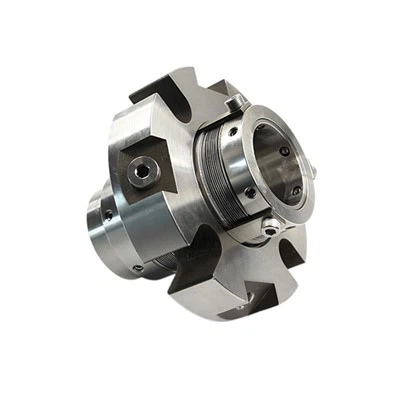
A typical dry gas seal consists of several key components. First, there are the primary sealing faces. These are usually made of hard materials like silicon carbide or tungsten carbide. The primary sealing faces are the ones that come into close contact and create the seal. One face is stationary, while the other rotates with the shaft.
Then, there's the secondary seal, which is often an O - ring or a similar elastomeric seal. The secondary seal helps to prevent any gas leakage around the edges of the primary sealing faces.
Another important part is the seal housing. The seal housing provides a protective enclosure for the sealing components and helps to maintain the proper alignment and pressure within the seal.
How the Dry Gas Seal Works
The working principle of a dry gas seal is based on the formation of a thin gas film between the sealing faces. When the compressor is running, the rotating sealing face creates a pumping action. This pumping action draws in a small amount of clean, pressurized gas into the space between the sealing faces.
As the gas is drawn in, it forms a stable gas film. This gas film acts as a lubricant and a barrier, preventing the direct contact between the sealing faces. The pressure of the gas film is carefully balanced to ensure that it provides enough force to keep the faces apart while still maintaining an effective seal.
The gas used in a dry gas seal is usually a clean, inert gas like nitrogen. Nitrogen is preferred because it's non - reactive and can be easily sourced. The gas is supplied to the seal through a gas supply system, which regulates the pressure and flow of the gas.
The Importance of Pressure Balance
Maintaining the right pressure balance is crucial for the proper functioning of a dry gas seal. If the pressure of the gas film is too low, the sealing faces may come into contact, causing wear and potential leakage. On the other hand, if the pressure is too high, it can lead to excessive gas consumption and may even cause the seal to fail.
To achieve the right pressure balance, most dry gas seals are equipped with a control system. This control system monitors the pressure and temperature of the gas film and adjusts the gas supply accordingly.
Different Types of Dry Gas Seals
There are several different types of dry gas seals, each designed for specific applications. One common type is the tandem dry gas seal. In a tandem dry gas seal, there are two sets of sealing faces arranged in series. This provides an extra layer of protection against leakage.
Another type is the double dry gas seal. A double dry gas seal has two independent seals, separated by a buffer gas. The buffer gas helps to prevent the process gas from leaking into the environment and also provides additional lubrication.
Applications of Dry Gas Seals
Dry gas seals are widely used in various industries. In the oil and gas industry, they are used in compressors for natural gas processing, refineries, and petrochemical plants. They are also used in power generation, particularly in gas turbines.
In the chemical industry, dry gas seals are used to prevent the leakage of hazardous chemicals. Their ability to operate in high - pressure and high - temperature environments makes them an ideal choice for these applications.
Our Products and Their Advantages
As a dry gas seal supplier, we offer a range of high - quality products. For example, our MOR 28XP Compressor Dry Gas Seal is designed for high - performance compressors. It features advanced sealing technology and is built to withstand extreme conditions.
Our Dry Gas Seal Test Rig is another great product. It allows us to test the performance of our dry gas seals under different operating conditions, ensuring that they meet the highest standards.
We also have the MOR TDGS Compressor Dry Gas Seal, which is specifically designed for applications where reliability and efficiency are of utmost importance.
Why Choose Our Dry Gas Seals
There are several reasons why you should choose our dry gas seals. First of all, our seals are made from high - quality materials, which ensures their durability and long - term performance. We also have a team of experienced engineers who can provide customized solutions to meet your specific needs.
Our seals are designed to be easy to install and maintain. We offer comprehensive technical support, so you can be confident that your dry gas seal will work properly from the moment it's installed.
Contact Us for Purchasing
If you're in the market for dry gas seals, we'd love to hear from you. Whether you need a single seal for a small project or a large quantity for an industrial application, we can help. Our team is ready to answer any questions you may have and guide you through the purchasing process.


References
- "Mechanical Seals Handbook" by John Adamson
- "Industrial Compressor Technology" by Peter Jackson
- "Gas Sealing Technology" by Robert Smith