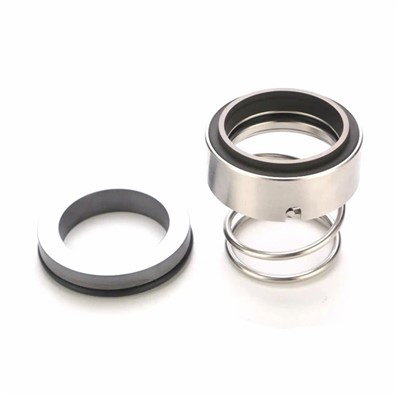
Hey there! As a single seal supplier, I've had the pleasure of diving deep into the world of single seals used in pneumatic systems. In this blog, I'm gonna share with you the key characteristics of these seals and why they're so important in pneumatic applications.
1. Leakage Prevention
One of the most crucial characteristics of single seals in pneumatic systems is their ability to prevent leakage. Pneumatic systems rely on compressed air to operate, and any leakage can lead to a loss of pressure, reduced efficiency, and even system failure. Single seals are designed to create a tight seal between two components, such as a piston and a cylinder, to prevent air from escaping.
For example, in a pneumatic cylinder, a single seal is installed around the piston to ensure that the compressed air stays inside the cylinder and is used to move the piston. If the seal is not properly installed or is damaged, air can leak out, causing the cylinder to lose power and not function correctly.
2. Compatibility with Pneumatic Fluids
Single seals need to be compatible with the pneumatic fluids used in the system. Pneumatic systems typically use compressed air, but they can also use other gases or fluids depending on the application. The seal material must be able to withstand the chemical and physical properties of the fluid without degrading or losing its sealing properties.
For instance, if the pneumatic system uses a lubricated air, the seal material should be resistant to the lubricant to prevent swelling or softening. Some common seal materials used in pneumatic systems include nitrile rubber (NBR), fluorocarbon rubber (FKM), and silicone rubber. Each material has its own set of properties and is suitable for different applications.
3. Durability and Longevity
Pneumatic systems often operate under high pressure and frequent cycling, which means that the single seals need to be durable and have a long service life. The seal should be able to withstand the wear and tear caused by the movement of the components and the pressure of the pneumatic fluid.
A high-quality single seal will be made from materials that are resistant to abrasion, tearing, and chemical attack. It should also be designed to handle the specific operating conditions of the pneumatic system, such as temperature, pressure, and speed. For example, in a high-speed pneumatic system, the seal needs to be able to maintain its sealing properties even at high velocities.
4. Low Friction
Another important characteristic of single seals in pneumatic systems is low friction. Low friction helps to reduce the energy consumption of the system and improves the overall efficiency. When the seal has low friction, it allows the components to move smoothly without excessive resistance.
This is particularly important in applications where the pneumatic system needs to operate quickly and accurately, such as in automation and robotics. A seal with high friction can cause the system to slow down, increase wear on the components, and reduce the precision of the operation.
5. Easy Installation and Maintenance
Single seals should be easy to install and maintain. In a pneumatic system, components may need to be replaced or repaired regularly, and the seal should be easy to remove and install without causing damage to the system.
Some single seals are designed with features that make installation easier, such as pre-lubricated surfaces or self-aligning designs. Additionally, the seal should be easy to inspect and replace when necessary. This helps to minimize downtime and keep the pneumatic system running smoothly.
Our Product Offerings
As a single seal supplier, we offer a wide range of single seals that are suitable for various pneumatic applications. Our seals are made from high-quality materials and are designed to meet the strictest industry standards.


We have seals that are specifically designed for different types of pneumatic systems, including cylinders, valves, and actuators. Whether you need a seal for a high-pressure application or a low-friction environment, we have the right product for you.
For example, our 224 Double Acting Mechanical Seal for Centrifugal Pump is a great option for applications where a reliable and durable seal is required. This seal is designed to handle high pressures and is suitable for use in centrifugal pumps.
Our 208 Mechanical Seal Replacement for Pump with Low Pressure is another popular choice. It is designed for pumps that operate at low pressures and provides a tight seal to prevent leakage.
If you're looking for a seal that is equivalent to a type 2 mechanical seal, check out our Equivalent to type 2 mechanical seal. This seal offers similar performance and reliability at a competitive price.
Contact Us for Procurement
If you're in the market for single seals for your pneumatic system, we'd love to hear from you. Our team of experts can help you choose the right seal for your specific application and provide you with all the information you need.
Whether you have a small project or a large-scale industrial application, we have the products and expertise to meet your needs. So, don't hesitate to get in touch with us to discuss your requirements and start the procurement process.
References
- "Pneumatic Systems Handbook" by John C. Juvinall and Kurt M. Marshek
- "Sealing Technology Handbook" by John H. Bickford