


Hey there! As a dry gas seal supplier, I'm super stoked to dive into the components of a dry gas seal with you. Dry gas seals are crucial in a whole bunch of industries, like oil and gas, chemical processing, and power generation. They're used to prevent the leakage of gas from rotating equipment, such as compressors and pumps. So, let's break down what makes these seals tick.
Primary Sealing Elements
The heart of a dry gas seal lies in its primary sealing elements. These are the parts that actually come into contact with each other to create a barrier against gas leakage. The most common type of primary sealing element is the seal face. Seal faces are usually made of hard materials like silicon carbide or tungsten carbide, which are super durable and can withstand high pressures and temperatures.
One of the seal faces is stationary, while the other rotates with the shaft of the equipment. When the equipment is running, these two faces are separated by a thin film of gas, which acts as a lubricant and prevents direct contact between the faces. This is called a "dry" seal because there's no liquid lubricant involved. The gas film is maintained by the pressure differential between the sealed gas and the atmosphere or a buffer gas.

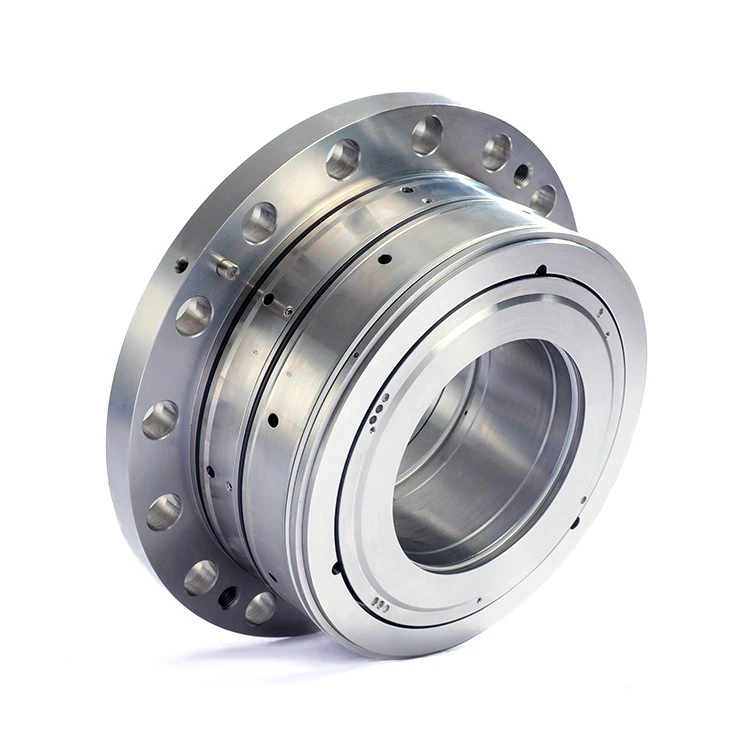
Secondary Sealing Elements
In addition to the primary sealing elements, dry gas seals also have secondary sealing elements. These are used to prevent gas from leaking around the edges of the primary seal faces. The most common type of secondary sealing element is the O-ring. O-rings are made of elastomeric materials like nitrile rubber or fluorocarbon rubber, which are flexible and can create a tight seal.
O-rings are typically installed in grooves around the perimeter of the seal faces or in the housing of the seal. They provide a secondary barrier against gas leakage and help to maintain the integrity of the primary seal. Another type of secondary sealing element is the static seal, which is used to seal the interface between the seal housing and the equipment. Static seals are usually made of gaskets or sealants, which are designed to prevent gas from leaking through the joints.
Buffer Gas System
A key component of a dry gas seal is the buffer gas system. This system is used to provide a clean, dry gas to the seal faces to maintain the gas film and prevent contamination. The buffer gas is usually supplied from an external source, such as a compressor or a gas cylinder.
The buffer gas system typically includes a filter, a regulator, and a flow meter. The filter is used to remove any particles or contaminants from the buffer gas, while the regulator is used to control the pressure of the gas. The flow meter is used to monitor the flow rate of the buffer gas and ensure that it's within the specified range.
The buffer gas can also be used to provide a positive pressure differential across the seal faces, which helps to prevent the ingress of process gas into the seal. This is important because process gas can contain contaminants that can damage the seal faces or cause the gas film to break down.
Monitoring and Control System
To ensure the proper operation of a dry gas seal, it's important to have a monitoring and control system in place. This system is used to monitor the performance of the seal and detect any potential problems before they become serious.
The monitoring and control system typically includes sensors that measure parameters such as temperature, pressure, and vibration. These sensors are connected to a control panel, which displays the data and alerts the operator if any of the parameters are outside of the normal range.
The control panel can also be used to adjust the settings of the buffer gas system, such as the pressure and flow rate of the buffer gas. This allows the operator to optimize the performance of the seal and ensure that it's operating at its best.
Seal Housing
The seal housing is the component that houses all of the other components of the dry gas seal. It's usually made of a strong, rigid material like steel or cast iron, which can withstand the high pressures and temperatures of the equipment.
The seal housing is designed to provide a secure mounting for the seal faces, secondary sealing elements, and buffer gas system. It also helps to protect the seal from external contaminants and damage.
Types of Dry Gas Seals
There are several different types of dry gas seals available, each with its own unique design and features. Some of the most common types include:
- Single Cartridge Dry Gas Seal: This is the simplest type of dry gas seal, which consists of a single seal cartridge that contains all of the necessary components. Single cartridge seals are easy to install and maintain, and they're suitable for a wide range of applications.
- Double Cartridge Dry Gas Seal: This type of seal consists of two seal cartridges that are installed in series. Double cartridge seals provide an extra level of protection against gas leakage and are often used in applications where the process gas is hazardous or where a high level of reliability is required. Check out our R2GD Compressor Double Cartridge Dry Gas Seal for a great example.
- Tandem Dry Gas Seal: A tandem dry gas seal consists of two seal faces that are arranged in a tandem configuration. Tandem seals provide a high level of sealing performance and are often used in applications where the pressure differential across the seal is high. Our MOR S2GD6 Double Cartridge Tandem Dry Gas Seal for Compressor is a top - notch option in this category.
- Face to Face Mechanical Seal: This type of seal has two seal faces that are arranged in a face - to - face configuration. Face to face seals are suitable for applications where the shaft speed is high and where a high level of stability is required. Take a look at our 1GD22 Pump Double Cartridge Dry Gas Face to Face Mechanical Seal for more details.
Why Choose Our Dry Gas Seals
As a dry gas seal supplier, we take pride in offering high - quality seals that are designed to meet the specific needs of our customers. Our seals are made from the best materials and are manufactured using the latest technology to ensure maximum performance and reliability.
We have a team of experienced engineers and technicians who can provide expert advice and support throughout the entire process, from selection to installation and maintenance. Whether you're looking for a standard dry gas seal or a custom - designed solution, we've got you covered.
Let's Connect for Your Dry Gas Seal Needs
If you're in the market for a dry gas seal, I encourage you to reach out to us. We're more than happy to discuss your requirements, provide you with a quote, and answer any questions you may have. We understand that choosing the right dry gas seal is crucial for the performance and reliability of your equipment, and we're committed to helping you make the best decision for your business. So, don't hesitate to contact us for procurement and let's start a great business relationship!
References
- Perry, R. H., & Green, D. W. (Eds.). (2008). Perry's Chemical Engineers' Handbook. McGraw - Hill.
- Lebeck, A. O. (1991). Mechanical Seals: Design and Application. Marcel Dekker.


