


Hey there! As a supplier of carbon ring seals, I often get asked a bunch of questions, and one that pops up quite a bit is, "Can carbon ring seals be used in cryogenic applications?" Well, let's dig into this topic and find out.
First off, let's talk a bit about what carbon ring seals are. Carbon ring seals are a type of mechanical seal that use carbon rings to prevent the leakage of fluids or gases in various industrial applications. They're known for their excellent self - lubricating properties, low friction, and good wear resistance. These seals are commonly used in pumps, compressors, and other rotating equipment.
Now, cryogenic applications are a whole different ballgame. Cryogenics deals with extremely low temperatures, usually below - 150°C (- 238°F). At these frigid temperatures, materials can behave very differently. Many common materials become brittle, lose their flexibility, and can crack or break. So, the big question is whether carbon ring seals can hold up in such harsh conditions.

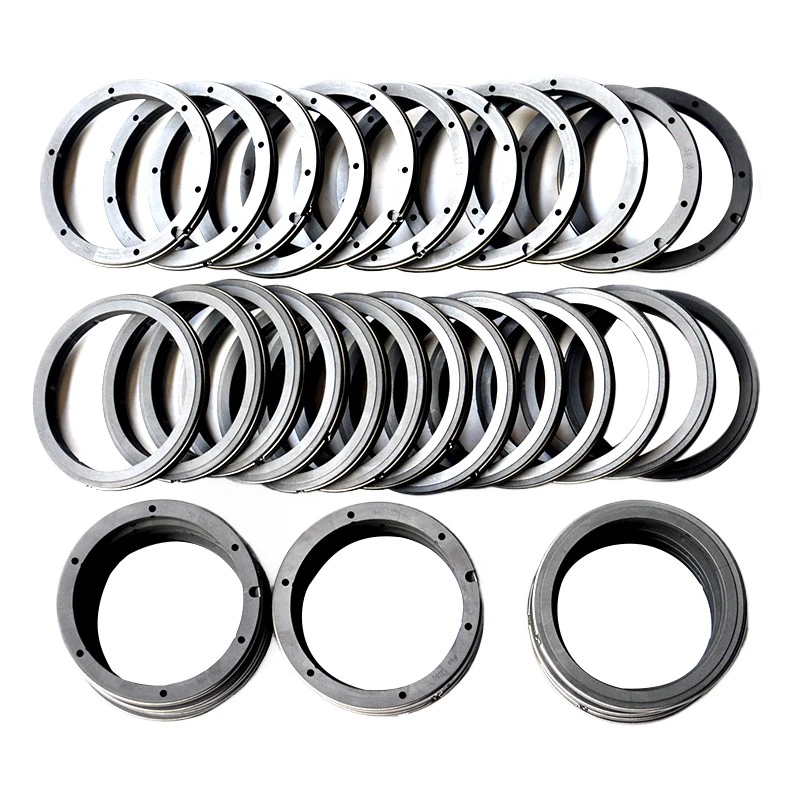
Advantages of Using Carbon Ring Seals in Cryogenic Applications
One of the main advantages of carbon ring seals in cryogenic applications is their thermal stability. Carbon has a relatively low coefficient of thermal expansion, which means it doesn't expand or contract significantly with changes in temperature. This is crucial in cryogenic environments where large temperature variations can occur. When a seal expands or contracts too much, it can lead to leakage or even damage to the equipment.
Another plus is the self - lubricating property of carbon. In cryogenic applications, it can be challenging to use traditional lubricants because they may freeze or become too viscous at low temperatures. Carbon ring seals can operate without the need for external lubrication, reducing the risk of lubricant - related issues.
Carbon is also chemically inert, which is a huge advantage in cryogenic applications. Cryogenic fluids can be highly reactive, and a seal that isn't chemically resistant can degrade quickly. Carbon ring seals can withstand the chemical attack of many cryogenic fluids, such as liquid nitrogen, liquid oxygen, and liquefied natural gas (LNG).
Challenges and Considerations
However, using carbon ring seals in cryogenic applications isn't without its challenges. One of the main issues is the potential for brittleness. While carbon is generally a strong material, at extremely low temperatures, it can become more brittle and prone to cracking. This means that the design of the carbon ring seal needs to be carefully considered to minimize stress concentrations.
The installation process is also critical. In cryogenic applications, the seal needs to be installed correctly to ensure a proper fit. Any misalignment or improper installation can lead to premature failure. Additionally, the seal needs to be able to accommodate any thermal contractions that occur during the cooling process.
Real - World Examples and Products
We've had some success stories with our carbon ring seals in cryogenic applications. For instance, our MOR CRS929 Carbon Ring Seal For Screw Compressor has been used in cryogenic screw compressors. These compressors are used in LNG plants to compress the gas at low temperatures. The carbon ring seal has performed well, providing reliable sealing and minimizing leakage.
Another product that's suitable for cryogenic applications is our Split Carbon Ring Seal with Isolation Gas. This type of seal is designed to provide an extra layer of protection by using an isolation gas. The isolation gas helps to prevent the cryogenic fluid from reaching the seal faces, reducing the risk of damage and improving the overall performance of the seal.
Testing and Quality Assurance
To ensure that our carbon ring seals can meet the demands of cryogenic applications, we conduct rigorous testing. We test our seals in cryogenic chambers to simulate real - world conditions. This allows us to evaluate the performance of the seals under different temperatures, pressures, and fluid conditions.
We also have a strict quality assurance process in place. Every carbon ring seal that leaves our factory is inspected thoroughly to ensure that it meets our high standards. We use advanced manufacturing techniques and materials to produce seals that are reliable and long - lasting.
Conclusion
So, can carbon ring seals be used in cryogenic applications? The answer is yes, but with proper design, installation, and maintenance. Carbon ring seals offer several advantages in cryogenic environments, such as thermal stability, self - lubrication, and chemical resistance. However, they also come with challenges, such as brittleness and installation requirements.
If you're in the market for carbon ring seals for cryogenic applications, we're here to help. Our team of experts can work with you to select the right seal for your specific needs. Whether you're dealing with LNG, liquid nitrogen, or other cryogenic fluids, we have the experience and the products to provide a reliable sealing solution.
If you're interested in learning more about our carbon ring seals or discussing your cryogenic application requirements, don't hesitate to reach out. We're always happy to have a chat and see how we can help you with your sealing needs.
References
- ASM Handbook Volume 2: Properties and Selection: Nonferrous Alloys and Special - Purpose Materials.
- Perry's Chemical Engineers' Handbook.


