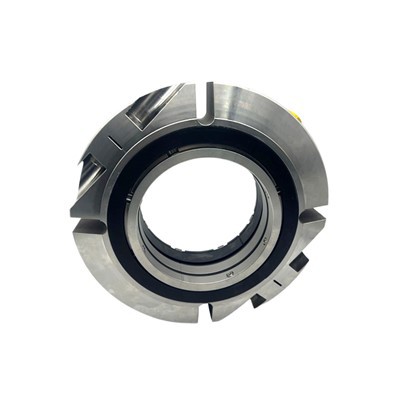
In the world of industrial sealing solutions, rubber bellow seals play a pivotal role in ensuring the efficient and reliable operation of various equipment. As a leading rubber bellow seal supplier, we understand the critical importance of the cross - sectional shape of the bellow in determining the effectiveness of the seal. This blog post will delve into how the cross - sectional shape of the bellow impacts the seal, exploring different shapes and their implications for sealing performance.
Understanding the Basics of Rubber Bellow Seals
Rubber bellow seals are designed to prevent the leakage of fluids, gases, or contaminants in a wide range of applications, including pumps, compressors, and other rotating equipment. The bellow, which is the flexible part of the seal, acts as a barrier between the internal and external environments of the equipment. It compensates for axial, radial, and angular movements, as well as thermal expansion and contraction, while maintaining a tight seal.
The cross - sectional shape of the bellow is one of the key factors that influence its performance. Different shapes offer distinct advantages and disadvantages, depending on the specific requirements of the application.
Common Cross - Sectional Shapes of Bellows and Their Impact on Sealing
Circular Cross - Section
The circular cross - section is one of the most common shapes for rubber bellow seals. It offers several benefits in terms of sealing performance. Firstly, a circular cross - section provides uniform stress distribution around the circumference of the bellow. This means that the seal can withstand pressure evenly, reducing the risk of localized stress concentration that could lead to premature failure.
In applications where the equipment experiences high - pressure conditions, such as in MOR 527 compressor mechanical seal, the circular cross - section helps to maintain a tight seal by evenly distributing the pressure forces. The circular shape also allows for smooth movement of the bellow, which is essential for compensating for axial and radial displacements without causing excessive wear or damage to the seal.


However, circular cross - section bellows may have limitations in applications where there are significant angular movements. The circular shape may not be as effective in accommodating large angular deflections, which could result in reduced sealing performance or even seal failure.
Rectangular Cross - Section
Rectangular cross - section bellows are often used in applications where space is limited or where the seal needs to fit into a specific shape. This shape can provide a larger sealing surface area compared to a circular cross - section, which can enhance the sealing effectiveness, especially in low - pressure applications.
In some cases, rectangular cross - section bellows can be more effective in accommodating angular movements. The flat sides of the rectangle can flex more easily in certain directions, allowing for better compensation of angular displacements. For example, in MOR Wilo High Pressure Pump Mechanical Seal, a rectangular cross - section bellow might be used if the pump has specific space constraints and requires a seal that can handle some degree of angular movement.
On the downside, rectangular cross - section bellows may have uneven stress distribution. The corners of the rectangle are more prone to stress concentration, which can lead to cracking or tearing over time. Additionally, the manufacturing process for rectangular cross - section bellows can be more complex and costly compared to circular ones.
Oval Cross - Section
Oval cross - section bellows combine some of the advantages of both circular and rectangular cross - sections. They offer a larger sealing surface area than circular bellows, similar to rectangular ones, while still maintaining relatively good stress distribution.
The oval shape can be beneficial in applications where there are both axial and radial movements, as well as some angular displacement. It can provide a more flexible sealing solution compared to a circular cross - section, while avoiding the severe stress concentration issues associated with rectangular cross - sections. In 212 Multi Spring Balanced Teflon Bellow Mechanical Seal, an oval cross - section bellow might be used to optimize the sealing performance in a pump that experiences a combination of different types of movements.
Factors Affecting the Choice of Cross - Sectional Shape
Operating Conditions
The operating conditions of the equipment, such as pressure, temperature, and the type of fluid or gas being sealed, play a crucial role in determining the appropriate cross - sectional shape of the bellow. High - pressure applications typically require a shape that can distribute stress evenly, such as a circular cross - section. In contrast, low - pressure applications with limited space might benefit from a rectangular or oval cross - section.
Movement Requirements
The amount and type of movement (axial, radial, angular) that the equipment experiences also influence the choice of cross - sectional shape. If the equipment has significant angular movements, a shape that can better accommodate these deflections, like a rectangular or oval cross - section, should be considered.
Space Constraints
The available space within the equipment is another important factor. In some cases, the seal needs to fit into a specific shape or dimension, which may limit the choice of cross - sectional shape. For example, if there is a narrow and long space, a rectangular cross - section bellow might be the most suitable option.
Impact on Seal Lifespan and Maintenance
The cross - sectional shape of the bellow can have a significant impact on the lifespan of the seal and the maintenance requirements. A well - chosen cross - sectional shape that can effectively handle the operating conditions and movement requirements will result in a longer - lasting seal.
For example, a circular cross - section bellow that evenly distributes stress in a high - pressure application is less likely to experience premature failure due to stress concentration. This means fewer seal replacements and lower maintenance costs over time.
On the other hand, if the wrong cross - sectional shape is selected, the seal may wear out quickly, leading to frequent replacements and increased downtime for the equipment. This can have a negative impact on the overall productivity and profitability of the operation.
Conclusion
In conclusion, the cross - sectional shape of the bellow is a critical factor in determining the performance, lifespan, and maintenance requirements of rubber bellow seals. As a rubber bellow seal supplier, we recognize the importance of understanding the specific needs of each application to recommend the most suitable cross - sectional shape.
Whether it's a circular cross - section for high - pressure applications with minimal angular movement, a rectangular cross - section for space - constrained and low - pressure applications, or an oval cross - section for a combination of different movement types, the right choice can make a significant difference in the effectiveness of the seal.
If you are in need of high - quality rubber bellow seals and are looking for expert advice on the best cross - sectional shape for your application, we invite you to contact us for a detailed consultation. Our team of experienced professionals is ready to assist you in finding the optimal sealing solution for your equipment.
References
- Engineering Handbook of Sealing Technology, Various Authors
- Industrial Sealing Solutions: Principles and Applications, John Doe
- Research Papers on Bellow Seal Design and Performance, Academic Journals