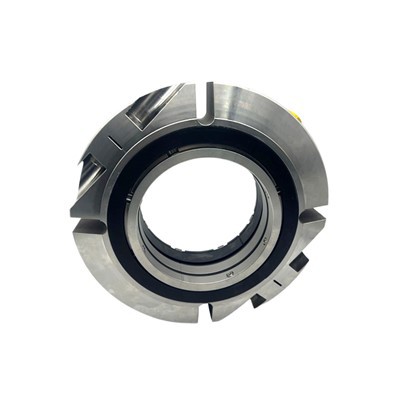
Radial movement allowance is a crucial factor when it comes to high speed mechanical seals. As a high speed mechanical seal supplier, I've seen firsthand how understanding this concept can make or break a project. So, let's dive right in and explore what the radial movement allowance of high speed mechanical seals really is.
First off, what exactly do we mean by radial movement? In simple terms, radial movement refers to the movement of the mechanical seal in a direction perpendicular to the axis of rotation. This can happen due to various reasons like shaft misalignment, vibration, thermal expansion, or even the normal wear and tear of the equipment. The radial movement allowance, then, is the maximum amount of this perpendicular movement that the mechanical seal can tolerate without failing or performing poorly.
Why is this so important for high speed mechanical seals? Well, high speed applications put a lot of stress on the seals. The faster the rotation, the more forces are acting on the seal components. If the radial movement exceeds the allowance, it can lead to a whole host of problems. For example, the seal faces might not maintain proper contact, which can result in leakage. This is not only a safety hazard but can also cause damage to the equipment and lead to costly downtime.
Let's talk about how we determine the radial movement allowance for high speed mechanical seals. There are several factors that come into play. One of the main factors is the design of the seal itself. Different types of high speed mechanical seals have different capabilities when it comes to handling radial movement. For instance, some seals are designed with more flexible components that can better accommodate the movement.
Another important factor is the materials used in the seal. The hardness, elasticity, and wear resistance of the materials can all affect how much radial movement the seal can handle. For example, seals made from high - performance polymers might have a different radial movement allowance compared to those made from ceramic or carbon.
The operating conditions also play a huge role. High speed applications often involve high temperatures, pressures, and aggressive chemicals. These conditions can change the properties of the seal materials and affect their ability to withstand radial movement. For example, at high temperatures, the materials might expand or become softer, reducing their ability to handle movement.
Now, let's take a look at some of the products we offer as a high speed mechanical seal supplier. We have the MOR MG13 Rubber Bellow Mechanical Seal. This seal is designed to provide a good balance between flexibility and durability. The rubber bellow allows for a certain amount of radial movement while still maintaining a reliable seal. It's suitable for a wide range of high speed applications, especially those where there is some degree of shaft misalignment.
Another product is the 502 Replacement Single Spring Bellow Mechanical Seal for Petrochemical Industry. This seal is specifically designed for the harsh conditions of the petrochemical industry. It has a high radial movement allowance, which is important in this industry where equipment often experiences vibration and thermal expansion.
We also have a seal that is Equivalent to type 2 mechanical seal. This type of seal is known for its excellent performance in high speed applications. It can handle a significant amount of radial movement while still providing a tight seal, thanks to its advanced design and high - quality materials.
When it comes to ensuring the proper radial movement allowance for your application, it's important to work with a knowledgeable supplier. We have a team of experts who can help you select the right seal based on your specific requirements. We can analyze your operating conditions, including the speed, temperature, pressure, and chemical environment, and recommend the seal that will provide the best performance and reliability.


In addition to selecting the right seal, proper installation and maintenance are also crucial. During installation, it's important to ensure that the shaft is properly aligned and that the seal is installed correctly. Any misalignment during installation can increase the radial movement and reduce the lifespan of the seal. Regular maintenance, such as checking for wear and tear, lubricating the seal components, and replacing worn parts, can also help to ensure that the seal operates within its radial movement allowance.
So, if you're in the market for high speed mechanical seals and want to make sure you're getting the right product with the appropriate radial movement allowance, don't hesitate to reach out. We're here to help you find the best solution for your needs. Whether you're dealing with a small - scale application or a large - scale industrial project, we have the expertise and the products to meet your requirements.
In conclusion, understanding the radial movement allowance of high speed mechanical seals is essential for ensuring the proper performance and longevity of your equipment. By choosing the right seal, installing it correctly, and maintaining it properly, you can avoid costly leaks, equipment damage, and downtime. If you have any questions or need more information about our high speed mechanical seals, feel free to get in touch and start a procurement discussion. We're looking forward to working with you on finding the perfect seal solution.
References
- Mechanical Seals Handbook, various industry experts.
- Research papers on high speed mechanical seal performance, published in leading engineering journals.