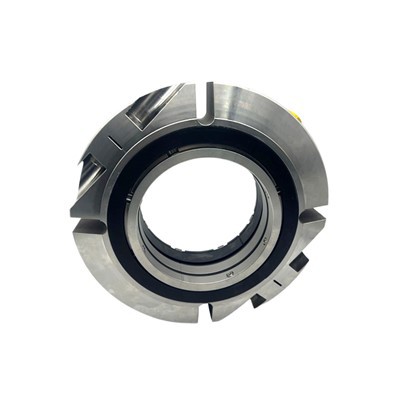
Hey there! I'm a supplier of high speed mechanical seals, and I've been in this business for quite a while. Today, I wanna talk about the disadvantages of high speed mechanical seals. It's not that I'm trying to bad - mouth my own products; it's just important for everyone to have a full understanding before making a purchase.
1. High Wear and Tear
One of the biggest issues with high speed mechanical seals is the high level of wear and tear. When these seals are operating at high speeds, the friction between the sealing faces can be intense. The constant rubbing generates a lot of heat, which can cause the seal faces to wear out quickly. For example, in a high - speed pump application, the seal might be rotating at thousands of revolutions per minute. This rapid movement causes the material on the seal faces to erode over time.
The wear can lead to leakage, which is a major problem in many industrial settings. Leakage not only means a loss of the fluid being sealed but can also pose safety risks. If the fluid is a hazardous chemical, a leak can contaminate the environment and endanger the health of workers. And replacing worn - out seals can be costly, both in terms of the cost of the new seal and the downtime required for installation.
2. Heat Generation
As I mentioned, high speed operation generates a significant amount of heat. The heat can have several negative effects on the mechanical seal. First of all, it can cause the material of the seal to expand. Different materials have different coefficients of thermal expansion, and this can lead to misalignment between the seal faces. When the seal faces are misaligned, the sealing performance is compromised, and leakage is more likely to occur.


Secondly, excessive heat can degrade the lubricating film between the seal faces. The lubricating film is crucial for reducing friction and preventing wear. If the heat breaks down this film, the friction increases even more, leading to a vicious cycle of more heat generation and more wear. In some extreme cases, the heat can even cause the seal material to melt or deform, rendering the seal completely ineffective.
3. Complex Installation and Maintenance
High speed mechanical seals are often more complex to install compared to their low - speed counterparts. They require precise alignment and careful adjustment to ensure proper operation. A small misalignment during installation can lead to premature failure of the seal. For instance, if the seal faces are not parallel within a very tight tolerance, it can cause uneven wear and leakage.
Maintenance of high speed mechanical seals is also a challenge. Regular inspections are necessary to check for signs of wear, heat damage, and leakage. The inspection process can be time - consuming and requires specialized tools and expertise. And when it comes to replacing parts, it's not as simple as just swapping out a component. You have to make sure that the new part is compatible with the existing system and that it's installed correctly.
4. Cost
Let's talk about cost. High speed mechanical seals are generally more expensive than low - speed seals. The materials used in high speed seals need to be able to withstand high temperatures, pressures, and friction. These high - performance materials come at a premium price. Additionally, the manufacturing process for high speed seals is often more complex, which also adds to the cost.
On top of the initial purchase cost, there are also the costs associated with installation, maintenance, and replacement. As I mentioned earlier, installation requires precision, which might mean hiring a professional installer. And the frequent maintenance and replacement of worn - out parts can really add up over time.
5. Limited Compatibility
High speed mechanical seals may have limited compatibility with certain fluids and operating conditions. Some fluids can be highly corrosive or abrasive, which can damage the seal material. For example, if you're trying to seal a fluid with a high concentration of abrasive particles, the seal faces can be quickly worn down.
Also, high speed seals might not be suitable for all types of equipment. Different pumps and machinery have different operating requirements, and a high speed seal that works well in one application might not work at all in another. You have to carefully consider the specific requirements of your system before choosing a high speed mechanical seal.
Our Product Offerings
Despite these disadvantages, high speed mechanical seals are still essential in many high - performance applications. At our company, we offer a range of high - quality high speed mechanical seals. For example, we have the John Crane 112 Replacement Unbalanced mechanical seal. This seal is designed to provide reliable sealing performance even at high speeds. It's made from high - quality materials that can withstand the rigors of high - speed operation.
We also have the 224 Double Acting Mechanical Seal for Centrifugal Pump. This double - acting seal is great for applications where extra protection against leakage is required. It's been engineered to work well in high - speed centrifugal pumps.
And if you're looking for a replacement seal, our HJ92N Mechanical Seal Replacement for Pump is a great option. It's designed to be a direct replacement for many existing seals, making the installation process easier.
Conclusion
In conclusion, while high speed mechanical seals have their disadvantages, they also play a crucial role in many industrial applications. If you're in the market for a high speed mechanical seal, it's important to weigh the pros and cons carefully. Consider the specific requirements of your system, the operating conditions, and your budget.
If you have any questions or are interested in purchasing our high speed mechanical seals, feel free to reach out to us. We're here to help you find the best solution for your needs.
References
- "Mechanical Seals Handbook" by John Dickson
- "High - Speed Rotating Machinery: Design, Analysis, and Applications" by Bently Nevada Corporation