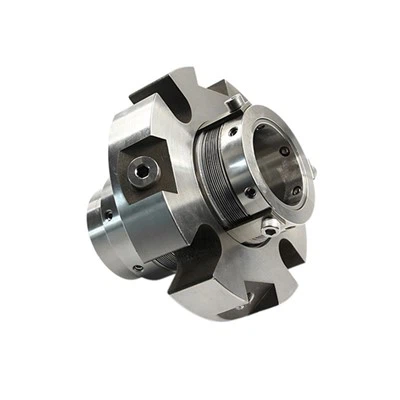
Selecting the appropriate dual mechanical seal for a specific application can be a real head - scratcher. But don't worry, as a dual mechanical seal supplier, I'm here to walk you through the process.
First off, let's talk about why dual mechanical seals are so important. In many industrial applications, single seals just won't cut it. Dual seals provide an extra layer of protection against leakage, which is super crucial when dealing with hazardous, expensive, or environmentally sensitive fluids.
Understanding the Application Requirements
The first step in choosing the right dual mechanical seal is to fully understand the application. You need to know what kind of fluid you're dealing with. Is it a corrosive chemical like sulfuric acid? Or is it a high - viscosity oil? Different fluids have different properties, and these properties will have a big impact on the type of seal you need.
For example, if you're working with a corrosive fluid, you'll want a seal made from materials that can withstand the chemical attack. Stainless steel is a common choice, but for really harsh chemicals, you might need something more exotic like Hastelloy.
The temperature of the fluid is another key factor. High - temperature applications require seals that can handle the heat without deforming or losing their sealing properties. On the other hand, low - temperature applications can cause some materials to become brittle. So, you need to pick a seal that's designed to work in the specific temperature range of your application.
Pressure is also a major consideration. High - pressure systems need seals that can withstand the force without leaking. If the pressure is too high for the seal, it can lead to catastrophic failure, which is definitely something you want to avoid.
Types of Dual Mechanical Seals
There are a few different types of dual mechanical seals, and each one has its own pros and cons.
Back - to - Back Dual Mechanical Seals
These seals are arranged with the faces of the two seals facing away from each other. They're great for applications where you need a high level of protection against leakage. The space between the two seals can be filled with a buffer fluid, which helps to lubricate the seals and prevent the process fluid from leaking out.
Face - to - Face Dual Mechanical Seals
In face - to - face seals, the faces of the two seals are facing each other. This type of seal is often used in applications where the pressure differential between the process fluid and the buffer fluid is relatively small. They're also good for applications where you need to minimize the amount of buffer fluid used.


Tandem Dual Mechanical Seals
Tandem seals are arranged in a series, with the primary seal handling most of the pressure and the secondary seal providing an extra layer of protection. They're commonly used in applications where the process fluid is extremely hazardous or where a high level of reliability is required.
Seal Materials
The materials used in the seal are just as important as the type of seal. The seal faces are usually made from materials like carbon, silicon carbide, or tungsten carbide. Carbon is a soft material that's great for low - pressure applications and has good self - lubricating properties. Silicon carbide is very hard and wear - resistant, making it suitable for high - pressure and high - temperature applications. Tungsten carbide is also hard and durable, but it's more expensive than silicon carbide.
The elastomers used in the seal, such as O - rings, also play a crucial role. They need to be compatible with the process fluid and the operating temperature. Nitrile rubber is a common choice for general - purpose applications, but for more demanding applications, you might need something like Viton or EPDM.
Our Product Recommendations
As a dual mechanical seal supplier, we have a range of products that can meet different application requirements.
The MOR MFL95N metal bellows seal is a great option for high - temperature and high - pressure applications. The metal bellows design provides excellent flexibility and can compensate for shaft misalignment. It's also highly resistant to corrosion and wear, making it suitable for a wide range of process fluids.
If you're looking for a seal that meets API standards, the MOR BXHHB BXH api mechanical seal is a top choice. It's designed to provide a reliable seal in challenging environments and is widely used in the oil and gas industry.
For applications where ease of installation and maintenance are important, the MOR LBG Cartridge Metal Bellow Seal is an ideal option. The cartridge design allows for quick and easy replacement, reducing downtime and maintenance costs.
Making the Final Decision
Once you've considered all the factors like the fluid properties, temperature, pressure, and the type of seal, you're ready to make a decision. But don't forget about the long - term costs. A more expensive seal might save you money in the long run if it has a longer lifespan and requires less maintenance.
It's also a good idea to consult with an expert. As a dual mechanical seal supplier, we have a team of experienced engineers who can help you choose the right seal for your specific application. We can provide technical support and guidance throughout the selection process.
If you're in the market for a dual mechanical seal, we'd love to have a chat with you. Whether you're dealing with a simple or a complex application, we're confident that we can find the perfect seal for you. Feel free to reach out and start a discussion about your procurement needs.
References
- Mechanical Seals Handbook, Second Edition by John Dickson
- Principles of Mechanical Seals by Alan Lebeck