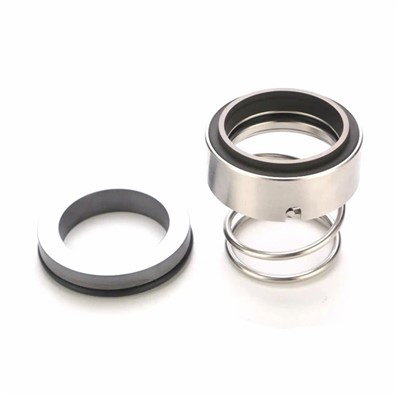
As a supplier of Teflon mechanical seals, I've witnessed firsthand the critical role that surface roughness plays in the performance and longevity of these essential components. In this blog post, I'll delve into the effects of surface roughness on Teflon mechanical seals, exploring how it impacts sealing efficiency, wear resistance, and overall system reliability.
Understanding Surface Roughness
Surface roughness refers to the irregularities present on the surface of a material. These irregularities can vary in size, shape, and distribution, and they are typically measured using parameters such as Ra (arithmetical mean deviation of the profile) and Rz (mean height of the profile irregularities). In the context of Teflon mechanical seals, surface roughness can have a profound impact on the seal's ability to function effectively.
Sealing Efficiency
One of the primary functions of a mechanical seal is to prevent the leakage of fluids between two mating surfaces. The surface roughness of the sealing faces plays a crucial role in achieving this goal. A smooth surface finish reduces the contact area between the sealing faces, minimizing the potential for fluid leakage. This is because a smooth surface allows for better conformity between the mating surfaces, creating a more effective seal.
On the other hand, a rough surface finish can lead to increased leakage rates. The irregularities on the surface can create gaps and channels through which fluids can escape. Additionally, rough surfaces can cause wear and damage to the sealing faces over time, further compromising the seal's integrity.


Wear Resistance
Another important consideration when it comes to surface roughness is wear resistance. Teflon mechanical seals are often subjected to high pressures, temperatures, and abrasive fluids, which can cause significant wear on the sealing faces. A smooth surface finish can help to reduce wear by minimizing the friction between the mating surfaces. This is because a smooth surface allows for easier movement of the sealing faces, reducing the likelihood of abrasion and damage.
In contrast, a rough surface finish can increase wear rates. The irregularities on the surface can act as abrasives, causing damage to the sealing faces and reducing their lifespan. Additionally, rough surfaces can trap particles and debris, which can further exacerbate wear and damage.
System Reliability
The surface roughness of the sealing faces can also have a significant impact on the overall reliability of the system. A well-sealed mechanical seal is essential for preventing fluid leakage, which can lead to equipment damage, environmental contamination, and safety hazards. By ensuring that the sealing faces have a smooth surface finish, you can improve the reliability of the system and reduce the risk of costly downtime and repairs.
Controlling Surface Roughness
To achieve the desired surface roughness for Teflon mechanical seals, it's important to use the right manufacturing processes and materials. Precision machining techniques, such as grinding and lapping, can be used to create smooth, flat surfaces with a high degree of accuracy. Additionally, the choice of materials can also affect the surface roughness of the sealing faces. Teflon is a popular choice for mechanical seals due to its low friction coefficient and excellent chemical resistance, but it's important to select a grade of Teflon that is suitable for the specific application.
Real-World Examples
To illustrate the importance of surface roughness in Teflon mechanical seals, let's take a look at some real-world examples. In a recent project, we supplied Teflon mechanical seals for a high-pressure pump system. The customer had been experiencing frequent leaks and premature wear of the seals, which was causing significant downtime and maintenance costs.
Upon inspection, we discovered that the surface roughness of the sealing faces was too high, which was leading to increased leakage rates and wear. We recommended that the customer use a precision machining process to reduce the surface roughness of the sealing faces. After implementing our recommendations, the customer reported a significant improvement in the performance of the seals, with reduced leakage rates and longer service life.
Another example involves a chemical processing plant that was using Teflon mechanical seals in a corrosive environment. The customer had been experiencing problems with seal failure due to chemical attack and wear. We recommended that the customer use a special grade of Teflon that was resistant to the specific chemicals in the process. Additionally, we recommended that the surface roughness of the sealing faces be carefully controlled to minimize the potential for wear and damage.
After implementing our recommendations, the customer reported a significant improvement in the reliability of the seals, with reduced downtime and maintenance costs. The smooth surface finish of the sealing faces helped to prevent chemical attack and wear, while the special grade of Teflon provided excellent resistance to the corrosive environment.
Conclusion
In conclusion, the surface roughness of the sealing faces plays a crucial role in the performance and longevity of Teflon mechanical seals. A smooth surface finish can improve sealing efficiency, wear resistance, and overall system reliability, while a rough surface finish can lead to increased leakage rates, wear, and premature failure. By understanding the importance of surface roughness and taking steps to control it, you can ensure that your Teflon mechanical seals perform at their best and provide long-lasting, reliable service.
If you're in the market for Teflon mechanical seals, we invite you to explore our range of products, including the MOR Wilo High Pressure Pump Mechanical Seal, John Crane 112 Replacement Unbalanced mechanical seal, and MOR 2 high temperature mechanical seal. Our team of experts is available to help you select the right seal for your specific application and provide you with the support and guidance you need to ensure its successful installation and operation. Contact us today to learn more about how we can help you meet your sealing needs.
References
- Bhushan, B. (2013). Principles and Applications of Tribology. Wiley.
- Hutchings, I. M. (2002). Tribology: Friction and Wear of Engineering Materials. Butterworth-Heinemann.
- Schmid, S. R., & Dowson, D. (2006). Tribology: Friction and Wear of Engineering Materials. Elsevier.