


Hey there! As a cartridge seal supplier, I often get asked about the principle of dynamic sealing in a cartridge seal. So, I thought I'd take a few minutes to break it down for you.
First off, let's talk about what a cartridge seal is. A cartridge seal is a pre - assembled unit that contains all the necessary components for a mechanical seal, such as the seal faces, secondary seals, and hardware. It's designed to be easily installed and replaced, which saves a lot of time and effort compared to traditional mechanical seals.
Now, onto the dynamic sealing principle. Dynamic sealing in a cartridge seal is all about preventing the leakage of fluids (liquids or gases) between two moving parts, usually a rotating shaft and a stationary housing. The key to this is the interaction between the seal faces.
The seal faces are the most critical part of the cartridge seal. There are two main types of seal faces: the primary seal face and the secondary seal face. The primary seal face is where the actual sealing action takes place. It consists of two flat surfaces that are in contact with each other under pressure. One of these surfaces is attached to the rotating shaft, and the other is attached to the stationary housing.
When the shaft rotates, the two seal faces rub against each other. This creates a thin film of fluid between the faces, which acts as a lubricant and a barrier to prevent leakage. The pressure exerted on the seal faces is crucial. If the pressure is too low, the fluid film may not be able to form properly, leading to leakage. On the other hand, if the pressure is too high, it can cause excessive wear on the seal faces and reduce the lifespan of the seal.
The secondary seal face, on the other hand, is used to prevent leakage around the edges of the primary seal face. It typically consists of an elastomeric O - ring or a similar sealing element. The secondary seal face provides an additional layer of protection and helps to ensure that the fluid stays within the system.
Another important factor in dynamic sealing is the material of the seal faces. Different materials have different properties, such as hardness, wear resistance, and chemical compatibility. For example, carbon is a commonly used material for seal faces because it has good self - lubricating properties and is relatively soft, which helps to reduce wear on the mating surface. On the other hand, silicon carbide is a very hard and wear - resistant material, making it suitable for applications where there is a lot of abrasion or high - pressure conditions.
Let's take a look at some of the products we offer as a cartridge seal supplier. We have the MOR GB - SECCOMIX - 11 Mechanical Seal. This seal is designed for a wide range of industrial applications. It uses high - quality materials for the seal faces, which ensures excellent sealing performance and long service life. The pre - assembled design makes it easy to install, even in tight spaces.
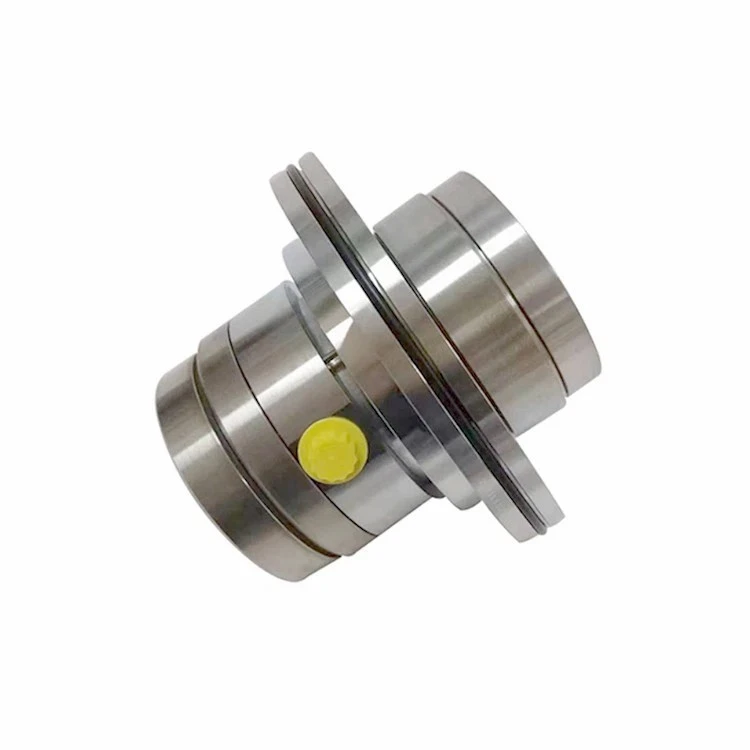

Then there's the MOR 8B1D reactor double mechanical seal. This double mechanical seal is specifically designed for use in reactors, where there are often high - pressure and high - temperature conditions. The double - seal design provides an extra level of protection against leakage, which is crucial in these types of applications.
We also offer the MOR JCS2A Pharmaceutical Centrifugal Pump Seals. These seals are made from materials that are compliant with pharmaceutical industry standards. They are designed to prevent any contamination of the pharmaceutical products, ensuring the safety and quality of the final product.
In addition to the seal faces and materials, the design of the cartridge seal also plays a role in dynamic sealing. The housing of the cartridge seal is designed to hold all the components in place and to provide a stable environment for the sealing action. It also helps to protect the seal from external contaminants, such as dust and dirt.
The springs in the cartridge seal are another important component. They are used to apply the necessary pressure on the seal faces. The springs ensure that the seal faces remain in contact with each other, even when there are minor variations in the shaft position or pressure.
Proper installation and maintenance are also essential for the effective dynamic sealing of a cartridge seal. During installation, it's important to follow the manufacturer's instructions carefully. This includes ensuring that the seal is properly aligned with the shaft and the housing, and that all the components are tightened to the correct torque.
Regular maintenance is also crucial. This includes checking the seal for signs of wear, such as leakage or excessive noise. If any problems are detected, the seal should be replaced as soon as possible to prevent further damage to the system.
To sum it up, the principle of dynamic sealing in a cartridge seal is based on the interaction between the seal faces, the material properties, and the design of the seal. By understanding these principles, you can choose the right cartridge seal for your application and ensure its long - term performance.
If you're in the market for a cartridge seal, whether it's for an industrial pump, a reactor, or a pharmaceutical centrifugal pump, we've got you covered. Our products are designed to meet the highest standards of quality and performance. We're always happy to help you find the right seal for your specific needs. So, if you're interested in learning more or want to start a procurement discussion, don't hesitate to reach out.
References
- "Mechanical Seals: Principles and Applications" by John A. S. Pearson
- "Sealing Technology Handbook" by John H. Birkle


