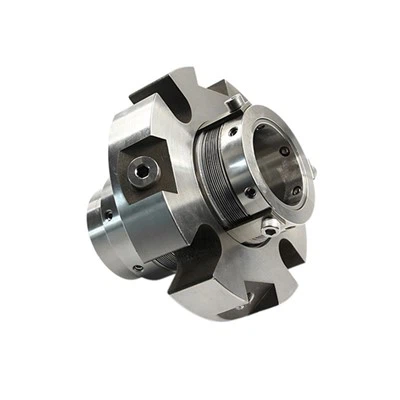
Hey there! As a supplier of carbon ring seals, I often get asked about the surface finish of these nifty little components. So, I thought I'd take a moment to break it down for you.
Let's start with the basics. A carbon ring seal is a crucial part in many industrial applications, especially in compressors and pumps. It helps to prevent leakage of fluids or gases, ensuring that the equipment operates efficiently and safely. But what exactly is the surface finish, and why does it matter?
The surface finish of a carbon ring seal refers to the texture and smoothness of its surface. It's measured in terms of roughness, which is typically expressed in microinches or micrometers. A smooth surface finish is essential for several reasons. Firstly, it reduces friction between the seal and the mating surface. When there's less friction, there's less wear and tear on both the seal and the equipment, which means a longer lifespan for the seal and less maintenance for you.
Secondly, a good surface finish helps to create a better seal. A smooth surface allows the carbon ring to conform more closely to the mating surface, minimizing the gaps through which fluids or gases could leak. This is particularly important in high-pressure applications, where even a small leak can lead to significant losses or safety hazards.
Now, let's talk about how the surface finish is achieved. There are several methods used in the manufacturing process to ensure the desired surface finish. One common method is grinding. Grinding uses an abrasive wheel to remove small amounts of material from the surface of the carbon ring, creating a smooth and even finish. Another method is lapping, which involves rubbing the carbon ring against a flat surface with an abrasive compound. Lapping can produce an extremely smooth surface finish, making it ideal for applications where a high level of sealing performance is required.
The choice of surface finish depends on the specific application of the carbon ring seal. For example, in applications where the seal is subjected to high speeds and pressures, a very smooth surface finish may be necessary to reduce friction and prevent leakage. On the other hand, in applications where the seal is used in a less demanding environment, a slightly rougher surface finish may be acceptable.
As a supplier, we offer a range of carbon ring seals with different surface finishes to meet the diverse needs of our customers. For instance, our MOR CRS929 Carbon Ring Seal For Screw Compressor is designed with a precision surface finish to ensure optimal performance in screw compressors. This seal is made from high-quality carbon materials and undergoes strict quality control measures to guarantee its reliability and durability.


Another product we have is the Split Carbon Ring Seal with Isolation Gas. This seal is specifically designed for applications where isolation gas is required to prevent the leakage of process fluids. The surface finish of this seal is carefully engineered to provide a tight seal and resist the effects of the isolation gas.
In addition to the surface finish, there are other factors that can affect the performance of a carbon ring seal. These include the material of the carbon ring, the design of the seal, and the operating conditions. For example, the type of carbon material used can impact the seal's resistance to wear, corrosion, and temperature. A seal made from a high-grade carbon material will generally have better performance and a longer lifespan than one made from a lower-grade material.
The design of the seal also plays a crucial role. A well-designed seal will have the right shape and dimensions to fit the application properly and provide a reliable seal. It should also be able to withstand the forces and pressures exerted on it during operation.
The operating conditions, such as temperature, pressure, and the type of fluid or gas being sealed, can also have a significant impact on the performance of the seal. For example, a seal used in a high-temperature environment will need to be made from a material that can withstand the heat without losing its sealing properties.
So, if you're in the market for a carbon ring seal, it's important to consider all these factors, including the surface finish. Make sure you choose a seal that is suitable for your specific application and meets your performance requirements.
At our company, we're committed to providing our customers with high-quality carbon ring seals that offer excellent performance and reliability. We have a team of experts who can help you select the right seal for your needs and provide you with technical support and advice.
If you're interested in learning more about our carbon ring seals or have any questions, feel free to reach out to us. We'd be happy to discuss your requirements and help you find the perfect solution for your application. Whether you're looking for a standard seal or a custom-designed one, we've got you covered.
In conclusion, the surface finish of a carbon ring seal is a critical factor that can significantly affect its performance. By understanding the importance of surface finish and choosing the right seal for your application, you can ensure the efficient and reliable operation of your equipment. So, don't hesitate to contact us if you're in need of a carbon ring seal. We're here to help you make the best choice and keep your operations running smoothly.
References
- Carbon Seals Handbook, Industrial Sealing Association
- Principles of Mechanical Sealing, John T. Henshaw